




From the ancient ruins of Rome and Pompeii to the artistry of Florence and the famous canals of Venice, get ready to experience la dolce vita!
12 Traditional Dishes
to Try in Italy
to Try in Italy

Italy is often spoken of as though it has one unified cuisine. In reality, the country is defined by many local food traditions, each shaped by different landscapes, ingredients, and histories. A meal in Naples tells a different story from a meal in Milan, Bologna, Florence, or Sicily. That strong regional character is what makes traditional Italian food so rewarding to explore.
For travelers, the most memorable meals in Italy are usually the ones that feel inseparable from place. A dish becomes more meaningful when it reflects the surrounding fields, coastlines, markets, and customs that gave it form. The best way to travel through Italy is to taste as much as you can wherever you are. This guide focuses on 12 traditional dishes to try in Italy and explains why each one matters in its home region. Rather than treating food as a checklist, we'll approach the table as one of the clearest ways to understand the country.
Why Traditional Italian Food Is Best Understood by Region
Italy Is a Country of Regional Cuisines
Italian cuisine is often treated as a single tradition, but the country is better understood as a collection of regional kitchens. Similar to its wine regions, geography explains much of the variety present in its cuisine. Alpine regions developed a taste for rice, butter, and slow-cooked richness, while southern regions leaned more heavily on olive oil, wheat, tomatoes, and vegetables. Historic trade routes, local agriculture, and city-based identities gave each area its own defining dishes long before anyone spoke of a unified national menu.
That is why traditional Italian food feels so closely tied to place. Bologna, Rome, Naples, Florence, Milan, Genoa, Bari, and Palermo each protect specialties that express local taste and technique. Even familiar ingredients shift character from one region to the next. For explorers looking for the best places to travel in Italy, learning that regional logic turns a good meal into a much more revealing cultural experience.
What Food Can Teach You About Place
A classic Italian dish usually carries more than flavor. It preserves evidence of climate, thrift, celebration, craftsmanship, and family memory. Ribollita speaks of practical Tuscan cooking, while arancini reflect Sicily’s layered history and love of generous, portable food. In every case, the plate reveals something about the people who shaped it.
This is part of what makes food such a valuable lens for cultural travel in Italy. Italian architecture and art may tell one story of a city, but the table tells another, often more intimate one. Regional specialties show how Italians turn local ingredients into identity, pride, and daily ritual. Once that connection becomes clear, deciding what to eat in Italy becomes less about chasing fame and more about understanding character. All that's left to do is learn what to expect and how to order in an Italian restaurant.
What to Eat in Northern Italy
Bologna and Milan, Where Patience Defines Flavor
If you're traveling in Northern Italy, Ragù alla Bolognese is one of the clearest expressions of the Emilia-Romagna region’s reputation for culinary precision. In Bologna, the dish is valued for its slow development of flavor and its sense of balance, not for theatrical heaviness. That distinction matters, because outside Italy the name is often attached to sauces that miss the dish’s structure and restraint. Tasting ragù in Bologna restores its proper identity as a carefully built classic rooted in patience and craft.
Milan offers a different but equally revealing form of richness. Risotto alla Milanese brings saffron, rice, and careful technique together in a dish that feels elegant rather than ornate, while osso buco shows how Lombard cooking transforms a humble cut into something deeply refined. Both dishes rely on time, attention, and an instinct for depth without excess. Together they show that northern Italian cuisine is not simply hearty, but measured, polished, and quietly luxurious.

Genoa and the Northern Coastline, Freshness With a Point of View
Pesto alla Genovese shows another side of northern Italian cooking. In Genoa, basil, olive oil, cheese, garlic, and pine nuts create a sauce that tastes vivid, fragrant, and unmistakably Ligurian. Its appeal lies in precision rather than complexity, because every element needs to feel fresh and in proportion. The result seems inseparable from the coastline that shaped it, where brightness and restraint matter as much as abundance.
That coastal freshness is one reason placing Italian food by region is such a useful way to think about the country. A dish like pesto has little in common with Milanese braises, yet both are fully Italian and equally rooted in their locations. The contrast reminds travelers that Italy is not a single culinary story told in different accents. It is a series of regional traditions, each with its own logic, ingredients, and sense of beauty.
Rome and Tuscany, the Heart of Central Italian Cooking
Rome’s Defining Pasta Dishes
Carbonara is one of Rome’s signature dishes because it turns a small group of ingredients into something bold and complete. Pasta, egg, cheese, cured pork, and black pepper come together with an almost architectural sense of balance. When made well, the dish feels rich without becoming heavy, and confident without unnecessary decoration. That clarity is a hallmark of Roman cooking, which often prefers direct flavor to elaborate layering. If you're looking for the best things to do in Rome, sitting down to a plate of carbonara should definitely be on your list.

Cacio e pepe takes that Roman discipline even further. With little more than pasta, pecorino, and pepper, it depends almost entirely on proportion and technique. The dish is admired precisely because it offers nowhere to hide, which makes its simplicity feel rigorous rather than plain. In Rome, it reads as a statement of culinary identity, proving that authentic Italian dishes do not need a long ingredient list to feel memorable.
Florence and the Tuscan Table
Florence is closely associated with Bistecca alla Fiorentina, a dish that captures Tuscany’s respect for excellent ingredients and confident preparation. Its appeal comes from quality, proportion, and restraint, not from complicated seasoning or presentation. The steak feels emblematic of a region that has long valued honest cooking and strong agricultural traditions. In Florence, it belongs not just to the menu but to a wider Tuscan understanding of abundance kept simple. Enjoying a steak in this city might even top be at the some travelers check list when it comes to the best things to do in Florence.
Ribollita reveals the other side of the same regional character. Built from bread, beans, and vegetables, it is a classic of Tuscan home cooking that turns frugality into depth and comfort. The dish shows how traditional Italian food often grew from practical habits, where nothing was wasted and flavor improved through repetition, reheating, and patience. For travelers, tasting ribollita in Tuscany helps explain why the region’s cuisine feels so grounded, expressive, and enduring.
Southern Italy and the Islands, Where Simplicity Turns Vivid
Naples and Campania, Classics With Global Fame
Pizza Margherita is perhaps the most famous example of how a local Italian dish became global without losing its regional soul. In Naples, the combination of tomato, mozzarella, basil, and dough feels elemental rather than basic. Its power comes from balance, texture, and the conviction that a few ingredients can be enough when tradition is strong. That is why trying it in Naples still feels essential, even for travelers who think they already know pizza.

Parmigiana di Melanzane belongs to this same southern world of generosity and warmth. Layers of eggplant, tomato sauce, and cheese create a dish that feels comforting, structured, and unmistakably Mediterranean. Campania is one of the regions most closely linked to its story, and tasting it there helps the dish feel less like a familiar casserole and more like a regional expression of southern cooking. It shows how everyday ingredients can be turned into something deeply satisfying through care and repetition.
Puglia and Sicily, Distinct Voices of the South
Orecchiette con cime di rapa is one of Puglia’s clearest culinary signatures, especially around Bari. The ear-shaped pasta and slightly bitter greens create a combination that feels rustic, direct, and beautifully resolved. It is a dish with strong agricultural roots, and that grounding gives it much of its identity. For travelers wondering what to eat in Italy beyond the most international favorites, it offers a more region-specific taste of the south.
Arancini bring Sicily’s exuberance and layered history to the table in a single bite. Their crisp exterior and rich filling make them memorable, but their importance runs deeper than texture alone. Sicily’s cuisine has been shaped by centuries of cultural exchange, and arancini reflect that complexity in a form that still feels practical, generous, and proudly local. Eating them on the island gives the dish its fullest meaning, because there it belongs to daily life as much as to culinary heritage.
Italian Food by Region, 12 Dishes at a Glance
A Quick Guide to Traditional Dishes in Italy
Seen together, these 12 dishes offer a useful shorthand for Italy’s regional diversity. They move from the rice and slow braises of the north to the pasta traditions of Rome, the sturdy soups of Tuscany, and the vividly expressive cooking of the south and Sicily. For anyone planning what to eat in Italy, the most helpful approach is not to search for a single national menu. It is to notice how each city or region speaks through its own specialties.
| Dish | City/Region | What Makes It Distinct |
|---|---|---|
| Pizza Margherita | Naples | An iconic pizza built on balance, texture, and Neapolitan confidence |
| Carbonara | Rome | A Roman pasta known for richness, precision, and a short list of powerful ingredients |
| Cacio e Pepe | Rome | Minimal ingredients, strong technique, and unmistakable Roman character |
| Ragù alla Bolognese | Bologna | Slow-built flavor and a classic example of Emilia-Romagna’s culinary rigor |
| Bistecca alla Fiorentina | Florence | A Tuscan steak that celebrates quality, restraint, and regional pride |
| Risotto alla Milanese | Milan | Saffron-scented elegance and the refined side of northern Italian rice cooking |
| Osso Buco | Milan | Slow-cooked veal that shows how Lombardy turns patience into depth |
| Pesto alla Genovese | Genoa | A vivid Ligurian sauce built on freshness, balance, and coastal character |
| Ribollita | Tuscany | A hearty soup that reflects thrift, repetition, and rural Tuscan tradition |
| Orecchiette con Cime di Rapa | Bari and Puglia | A rustic pasta dish defined by bitter greens and strong regional identity |
| Arancini | Sicily | Crisp rice croquettes that embody Sicilian generosity and layered history |
| Parmigiana di Melanzane | Campania | A southern layered dish built from eggplant, tomato, and cheese |
The value of a table like this is not just convenience. It shows how often the best traditional dishes in Italy are local rather than universal, and how often their meaning depends on context. A Roman pasta tells one story, a Tuscan soup another, and a Sicilian rice dish another still. That variety is exactly what makes eating through Italy so memorable.
Why These Authentic Italian Dishes Are Worth Seeking Out
Seeking out authentic Italian dishes in their home regions changes the rhythm of travel. Meals stop being pauses between museums, churches, and city walks and start becoming part of the interpretation of place. A bowl of cacio e pepe in Rome or pesto in Genoa can explain local taste just as clearly as a gallery or piazza can explain local style. Food becomes one more way to understand history, craftsmanship, and regional pride.
That is the deeper appeal of traditional Italian cuisine. It invites travelers to move beyond a generic idea of Italy and into the specifics that make each stop feel distinct. Northern elegance, Roman directness, Tuscan restraint, and southern warmth all appear at the table in memorable form. For culturally curious or culinary travelers, these dishes do more than satisfy appetite. They turn a journey through Italy into a richer encounter with the country itself.

8 Day Italy Tour of Milan, Cinque Terre
From
$2,250
$2,025


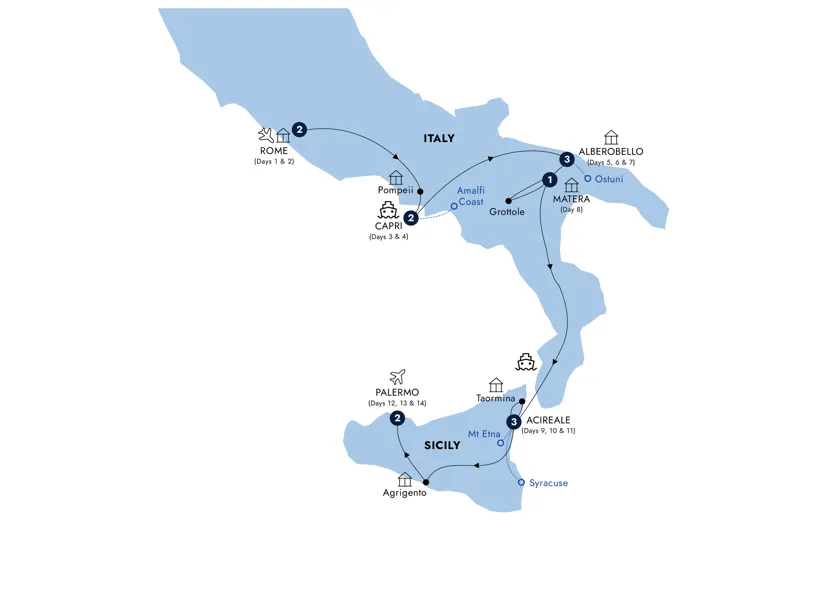
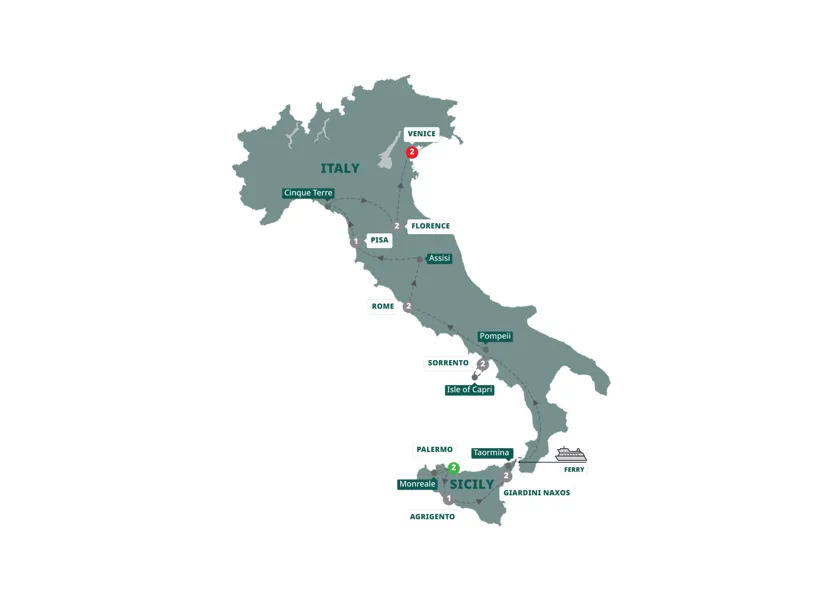
Two Week Tour to Rome, Alberobello & Sicily
From
$5,450
$4,905

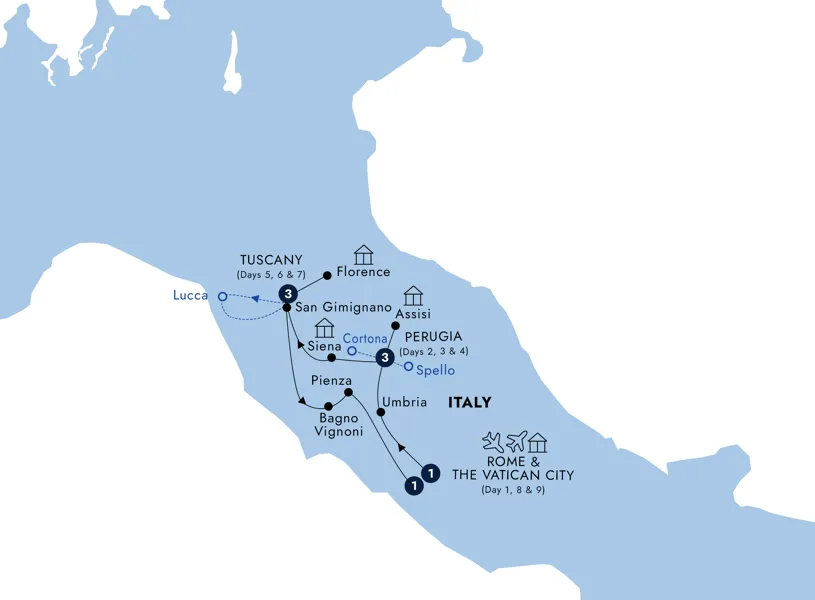
9 Day Italy Tour to Rome, San Gimignano & Perugia
Insight Vacations
From
$2,925
$2,633
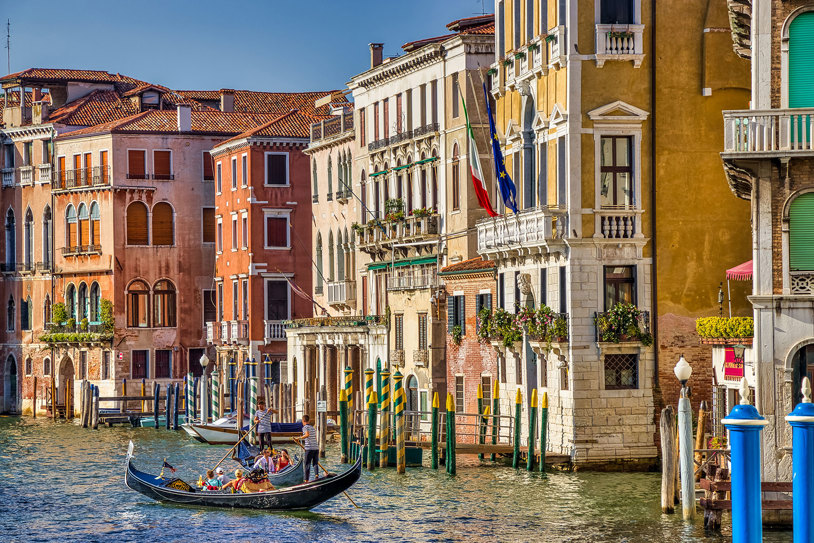




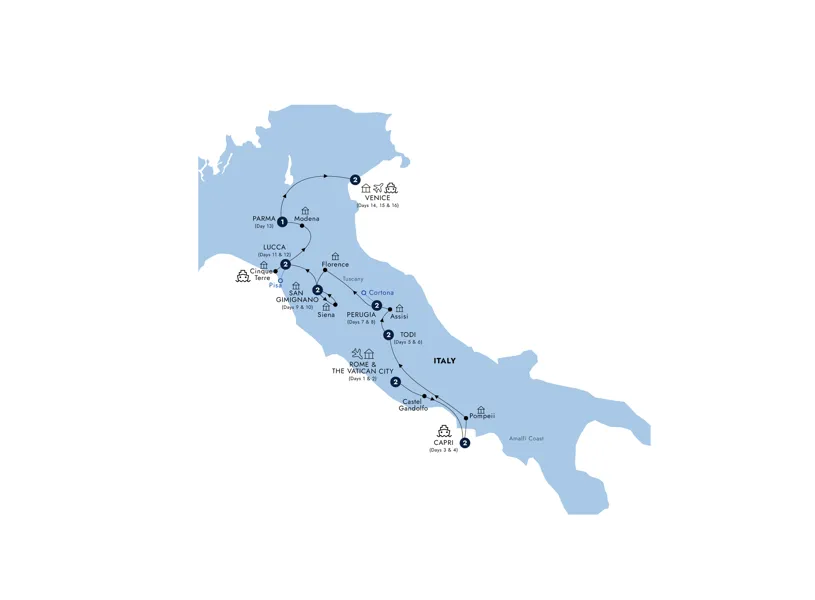
16 Day Italy Tour to Venice, Lucca & Perugia
From
$6,750
$6,075


10 Day Italy Tour to Milan, Venice & Verona
From
$4,150
$3,735


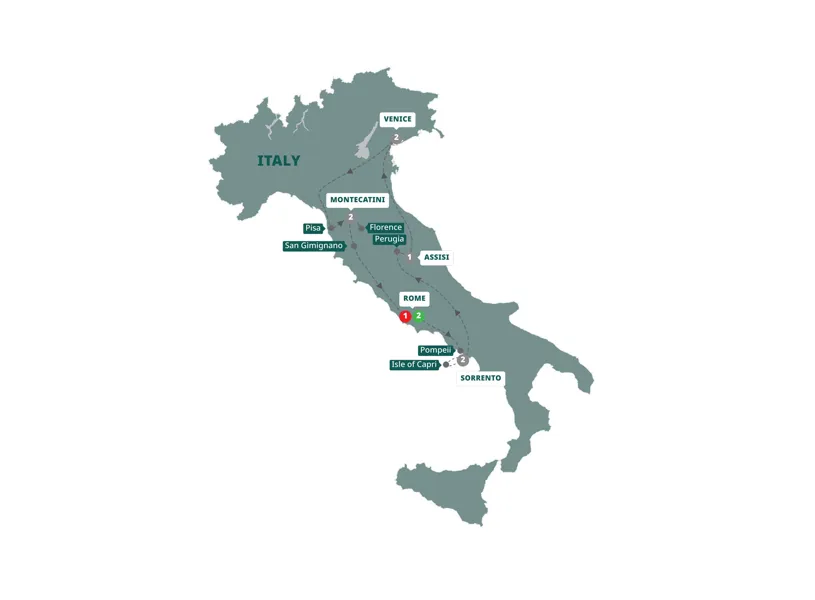
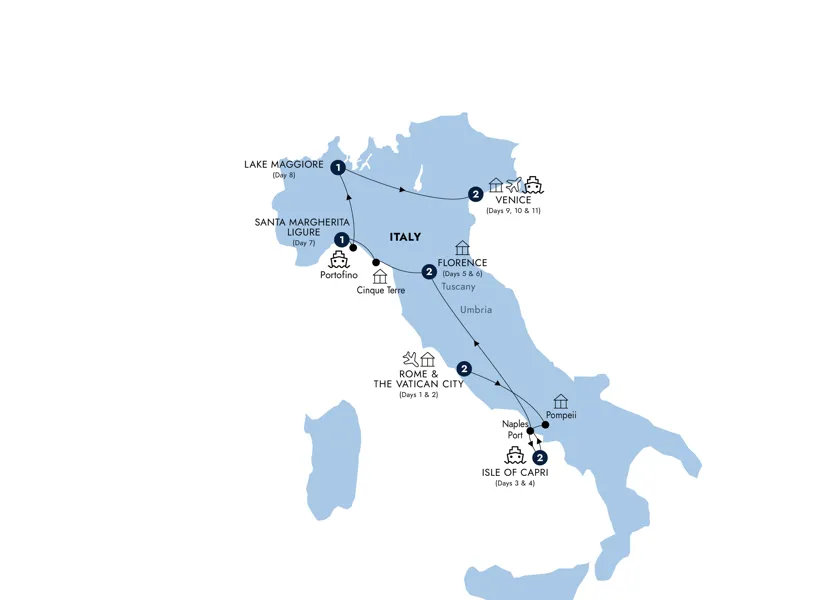
11 Day Tour to Isle of Capri, Venice & Florence
From
$5,475
$4,928
Frequently Asked Questions About Traditional Italian Food in Italy


Some of the most traditional dishes to try in Italy include Pizza Margherita, carbonara, cacio e pepe, ragù alla Bolognese, Bistecca alla Fiorentina, risotto alla Milanese, osso buco, pesto alla Genovese, ribollita, orecchiette con cime di rapa, arancini, and Parmigiana di Melanzane. What makes these dishes especially meaningful is their strong connection to specific cities or regions. They are not simply famous foods. They are part of local identity and culinary memory.
Yes, and that regional diversity is one of the defining features of Italian cuisine. Northern regions often emphasize rice, dairy, and slow-cooked dishes, while central and southern regions rely more heavily on olive oil, wheat pasta, tomatoes, and vegetables. Those broad patterns are only the beginning, because each city also protects its own specialties. This is why a meal in Milan can feel entirely different from a meal in Rome, Naples, or Palermo.
First-time visitors in Rome often start with carbonara and cacio e pepe because both dishes capture the city’s culinary character so clearly. Each one relies on a short ingredient list and careful technique rather than elaborate preparation. To round out the experience, don’t miss Rome’s street food, especially pizza al taglio, a rectangular, slice-by-slice style of pizza sold in bakeries across the city. It’s crisp, airy, and topped with everything from simple tomato to seasonal vegetables.
Together, these dishes show how Roman cooking favors bold flavor, balance, and confidence, making them some of the clearest examples of why Rome remains one of the essential food cities in Italy.
Northern Italy is often associated with risotto, slow-cooked meat dishes, rich sauces, and specialties tied to dairy and rice. Risotto alla Milanese, osso buco, ragù alla Bolognese, and pesto alla Genovese all show different sides of that tradition. Some dishes feel elegant and refined, while others feel deeply comforting. What connects them is an emphasis on precision, patience, and regional ingredients.
Pizza is certainly one of the most internationally recognized Italian dishes, especially Pizza Margherita from Naples. However, the origins of pizza are often in question, and it's good to remember that it represents only one part of a far broader culinary landscape. Italy is equally defined by regional pasta dishes, soups, rice preparations, meat classics, and vegetable-based specialties. The most traditional food in Italy depends heavily on where in the country you are standing.
A dish often makes the strongest impression in the place where it developed because the ingredients, expectations, and preparation traditions are still part of daily life there. The recipe is not isolated from its context. It belongs to a broader landscape of markets, family habits, and regional pride. That is why eating local specialties in their home cities often gives travelers a deeper and more memorable understanding of Italy.
Interested in Traditional Italian Food? You Might Also Like...


 Free Brochure
Order Your Free Brochure
Sign up to order your FREE travel brochure subscription and get exclusive offers only available to our subscribers
 Download Brochure
 View Brochure Online
 Shop Deals