




Explore Finland, Denmark, Norway, Iceland, and Sweden on these Scandinavia tours
Top Reasons to Visit
Scandinavia in Summer
Scandinavia in Summer

What Sets Summer Apart in Scandinavia
Scandinavia in summer feels expansive in a way few destinations do. Across Norway, Sweden, and Denmark, long daylight hours, dramatic fjords, coastal cities, and storybook villages create a travel experience that feels both immersive and effortless. Landscapes that may feel distant or hidden during colder months become fully visible in summer, while cities, historic sites, and waterfront districts come alive with outdoor dining, local traditions, and extended evening activity.
For travelers exploring Scandinavia on a guided tour, summer also brings the opportunity to experience the region with greater ease and depth. Rather than worrying about logistics, schedules, or navigating unfamiliar places, guests can simply settle into the journey itself, enjoying the changing scenery while experts handle every detail behind the scenes. The result is a more relaxed and enriching way to experience a region known for its natural beauty, cultural heritage, and extraordinary sense of space.
Whether admiring waterfalls from the Flåm Railway, strolling through Bergen’s colorful harbor district, or cruising beneath towering fjord cliffs, summer reveals Scandinavia at its most open, vibrant, and unforgettable.

The Magic of Extended Daylight
One of the most remarkable aspects of summer in Scandinavia is the extraordinary length of the days. Across much of the region, daylight stretches well into the evening, creating more time to experience each destination and changing the overall atmosphere of the journey.
In cities such as Oslo and Stockholm, waterfront districts remain lively late into the night as locals gather outdoors to enjoy the season after the long Nordic winter. Cafés spill into public squares, harbor promenades glow beneath the evening light, and historic streets remain active long after dinner. The extended daylight creates a sense of continuity throughout the journey, where sightseeing never feels rushed and every destination feels more fully revealed.
In Oslo, travelers can admire the elegant Royal Palace, the medieval Akershus Fortress, and the striking architecture of the modern Opera House before strolling through the revitalized Bjørvika waterfront district. Frogner Park offers another side of Norwegian culture, where more than 200 sculptures by Gustav Vigeland line bridges and pathways in one of the world’s most unique open-air art installations.
In Stockholm, the long evenings create a distinctly Scandinavian atmosphere across the city’s islands and waterways. Travelers can wander through the cobbled streets of Gamla Stan, admire the grandeur of the Royal Palace, and visit the City Hall where the Nobel Prize banquet is held. The city’s combination of water, green space, and historic architecture becomes especially captivating beneath the soft northern summer light.
Scandinavia’s Midnight Sun
As travelers journey further north through Scandinavia, the region’s extraordinary summer light becomes even more dramatic. In parts of northern Norway and Sweden, the sun lingers late into the evening and, in some areas, never fully disappears beneath the horizon. Known as the "Midnight Sun," this natural phenomenon transforms the atmosphere of the region during the summer months.
When the Midnight Sun is shining, Fjords, forests, fishing villages, and mountain landscapes remain illuminated beneath glowing skies long after traditional sunset hours, creating a sense of continuity that feels unique to the Nordic north. Even simple moments, such as dining beside a harbor, watching light reflect across still water, or admiring mountain peaks late in the evening, take on a distinctly memorable quality beneath the lingering daylight.
For many travelers, the Midnight Sun becomes one of the most unexpected highlights of a Scandinavian summer journey, offering an experience that feels both peaceful and surreal while revealing the landscape in a completely different way.

Fjords and Landscapes at Full Scale
Scandinavia’s landscapes are among the defining highlights of a summer journey through the Nordic region. In Norway especially, towering mountains, deep fjords, glacial valleys, and powerful waterfalls create scenery that feels both dramatic and expansive. Summer reveals these environments at their most vibrant, with green hillsides, flowing rivers, and clear views across mountain terrain and coastal waterways.
The experience of traveling through Norway is shaped not only by individual destinations, but by the constantly changing scenery between them. Wide mountain plateaus give way to narrow fjords framed by steep cliffs, while quiet villages sit beside waterways carved by glaciers over thousands of years. Throughout the journey, the landscape itself becomes one of the most memorable parts of the Scandinavian experience.
Few travel experiences capture Norway’s natural beauty more powerfully than the Flåm Railway. Often considered one of the world’s most scenic rail journeys, the route passes waterfalls, river valleys, mountain tunnels, and dramatic fjord scenery as it descends toward Aurlandsfjord. Large panoramic windows reveal uninterrupted views of the surrounding landscape, allowing travelers to fully appreciate the scale and beauty of Norway’s fjord country.
Geirangerfjord offers another unforgettable perspective on Norway’s dramatic terrain. Surrounded by towering cliffs, deep blue waters, and waterfalls such as the famous Seven Sisters, the fjord’s UNESCO-listed landscape feels almost cinematic in scale. Cruising through these waters reveals abandoned mountain farms perched high above the fjord and forests stretching upward toward snowcapped peaks.
From Plateau to Fjord
One of the most striking elements of Norway’s scenery is the way the environment changes across relatively short distances. Crossing Hardangervidda, one of Europe’s largest mountain plateaus, introduces travelers to open moorland, glacial lakes, and distant peaks that stretch across the horizon. The wide, elevated terrain creates a strong contrast to the fjord landscapes that follow further west.
As the scenery shifts toward the coast, mountains become steeper, waterfalls more frequent, and waterways narrower and deeper. Fjords cut dramatically through the landscape, while forests and small villages cling to the edges of the water. Experiencing these changing environments within the same journey gives travelers a deeper appreciation for the geological forces that shaped Scandinavia over thousands of years.
Summer conditions enhance these views throughout the region. Waterfalls flow at full strength from melting snowfields, mountain scenery remains clearly visible for longer portions of the day, and fjord landscapes appear especially vivid beneath the lingering Nordic light. The result is an environment that feels expansive, layered, and deeply connected to the rhythms of the natural world.

Nature, Wildlife, and Sámi Traditions
Summer also brings Scandinavia’s wildlife and natural ecosystems into greater focus. Across the northern regions of Norway and Sweden, reindeer are commonly seen moving across mountain tundra and open Arctic landscapes. These animals remain closely connected to the traditions and identity of the Sámi people, the Indigenous people of northern Scandinavia whose culture has been shaped by the Arctic environment for thousands of years.
Sámi heritage continues through storytelling traditions, handicrafts, music known as joik, and traditional clothing called gákti. While not all Sámi communities practice reindeer herding today, reindeer remain an important symbol of Sámi culture and their enduring relationship with the land. Encounters with Sámi traditions provide travelers with a richer understanding of northern Scandinavia beyond its scenery alone.
The region’s close connection to nature is also reflected in its commitment to conservation and environmental stewardship. In southern Norway, places such as the Wild Salmon Center in Lyngdal offer insight into how waterways and native wildlife are actively protected through education and ecological management. Observing salmon through underwater viewing areas and learning from local experts creates a more personal connection to the ecosystems that shape life throughout Scandinavia.
Throughout Scandinavia, nature is not treated as something separate from daily life, but as an essential part of cultural identity and community. Fjords, forests, rivers, and coastal landscapes influence local traditions, cuisine, architecture, and seasonal rhythms across the region. Experiencing these environments during summer allows travelers to see Scandinavia at its most vibrant, immersive, and interconnected.

Scandinavian Culture Beyond the Landmarks
What makes Scandinavia especially rewarding in summer is that culture feels woven naturally into everyday life rather than confined to museums alone. Historic districts, royal palaces, waterfront neighborhoods, and local traditions remain active parts of modern Scandinavian cities. Throughout the region, travelers experience places that feel lived-in and connected to the rhythms of daily Scandinavian life rather than preserved only for tourism.
In Bergen, colorful wooden warehouses line the UNESCO-listed Bryggen waterfront, reflecting the city’s centuries-old role as a Hanseatic trading port. The harbor remains lively during summer, with flower stalls, seafood vendors, cafés, and fishing boats creating an atmosphere deeply connected to Bergen’s maritime identity. Travelers exploring the city with a Local Expert gain insight into how the sea shaped both Norway’s economy and cultural traditions for generations.
In Denmark, cultural heritage takes on a more storybook atmosphere that feels closely tied to the country’s literary and royal history. Odense, birthplace of Hans Christian Andersen, invites travelers into the world of the beloved writer whose fairy tales became known around the globe. Museums dedicated to his life reveal not only his stories, but also his travels, inspirations, and personal experiences that shaped his work.
Nearby, St. Canute’s Cathedral connects visitors to Denmark’s Viking-era past and the legacy of the country’s last Viking king. Historic churches, royal landmarks, and preserved town centers throughout Denmark create a sense of continuity between the medieval past and contemporary Scandinavian life. These experiences help travelers understand how history remains visible within the structure and identity of modern Nordic cities.
Copenhagen balances royal grandeur with relaxed Scandinavian charm in a way that feels especially vibrant during summer. Travelers can admire Christiansborg Palace, Amalienborg Palace, and the colorful harborfront of Nyhavn before spending an evening at Tivoli Gardens, one of the oldest amusement parks in the world. Beneath glowing lanterns and lingering summer skies, Tivoli’s gardens, historic rides, restaurants, and open-air atmosphere create one of the most memorable cultural experiences in Scandinavia.
Meaningful Local Experiences
One of the defining advantages of a guided tour through Scandinavia is the opportunity to connect with local people and traditions in ways that go beyond sightseeing alone. Across Norway, Sweden, and Denmark, experiences with local hosts, storytellers, and community traditions create a more personal understanding of the region. These moments often become some of the most memorable parts of the journey because they connect travelers not only to the destinations themselves, but also to the people who call Scandinavia home.
In Norway, travelers may share a Be My Guest dinner with the Øvre-Eide family on their fifth-generation farm outside Bergen. Surrounded by fjord landscapes and rural countryside, guests learn about Norwegian farming traditions while enjoying regional dishes prepared with fresh, locally sourced ingredients. Experiences such as these provide insight into everyday life in Norway while creating meaningful connections beyond the major landmarks and cities.
In Sweden, a traditional fika experience introduces travelers to one of the country’s most cherished cultural customs. Over coffee and pastries at a family-run café in Gränna, locals share stories about preserving regional heritage and everyday Swedish traditions. The experience highlights the Scandinavian appreciation for community, hospitality, and taking time to enjoy meaningful moments together.
Other experiences bring travelers closer to Scandinavia’s artistic, scientific, and historical legacy. In Uppsala, storyteller Hans Odoo introduces guests to the world of Carl Linnaeus and Sweden’s first botanical garden, sharing stories that connect science, history, and local culture. Visits to Viking museums, stave churches, royal palaces, and historic waterfronts further deepen the understanding of Scandinavia’s layered cultural identity.
These experiences create a stronger emotional connection to Scandinavia and add depth to the overall journey. Rather than simply observing famous landmarks, travelers engage with local traditions, regional cuisine, and personal stories that reveal a more authentic side of the Nordic countries. The result is a travel experience that feels immersive, memorable, and deeply connected to the places visited.
Why Summer is Ideal for a Guided Tour Through Scandinavia
Summer allows Scandinavia to be experienced with greater openness, energy, and immersion than any other season. Long daylight hours illuminate fjords, waterfalls, mountain villages, and historic city centers well into the evening, while seasonal markets, outdoor cafés, and waterfront districts bring cities to life. Across Norway, Sweden, and Denmark, the region feels especially vibrant during the summer months, with landscapes and cultural experiences fully revealed beneath the extended Nordic light.
Traveling on a guided tour enhances that experience even further by allowing guests to focus entirely on the journey itself. Experienced Travel Directors and Drivers handle every detail behind the scenes while Local Experts provide deeper insight into the history, culture, and traditions of each destination. This creates a seamless experience where travelers can simply enjoy each moment as it unfolds, from scenic fjord cruises to evenings spent beneath glowing Scandinavian skies.
Throughout the journey, travelers experience a carefully curated combination of iconic landmarks and meaningful local encounters. One day may include standing beside towering waterfalls along the Flåm Railway or cruising through the dramatic landscapes of Geirangerfjord, while another may feature dinner with a Norwegian family, exploring Copenhagen’s colorful waterfront, or hearing stories from local guides in Sweden’s historic towns. These experiences work together to create a broader understanding of Scandinavia that goes far beyond sightseeing alone.
Summer reveals Scandinavia at its most expansive and welcoming, where dramatic natural beauty, cultural traditions, and local experiences come together in unforgettable ways. From royal capitals and historic harbor towns to quiet fjords and Arctic landscapes, the region offers an extraordinary combination of scenery, heritage, and human connection. Experiencing it all on a guided tour allows travelers to fully immerse themselves in the beauty and atmosphere of Scandinavia while enjoying the comfort and expertise that make the journey effortless and enriching.

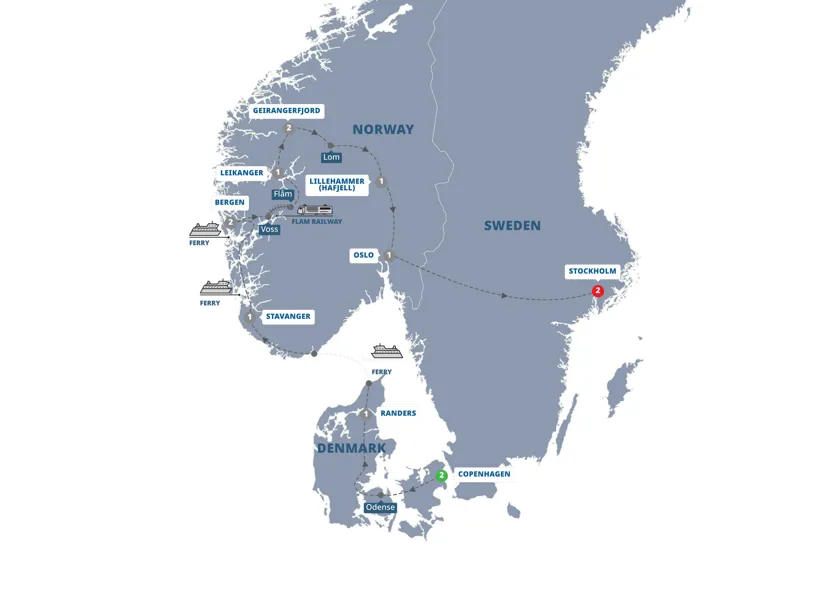
14 Day Scandinavian Tour of Denmark, Norway
From
$5,750
$5,175

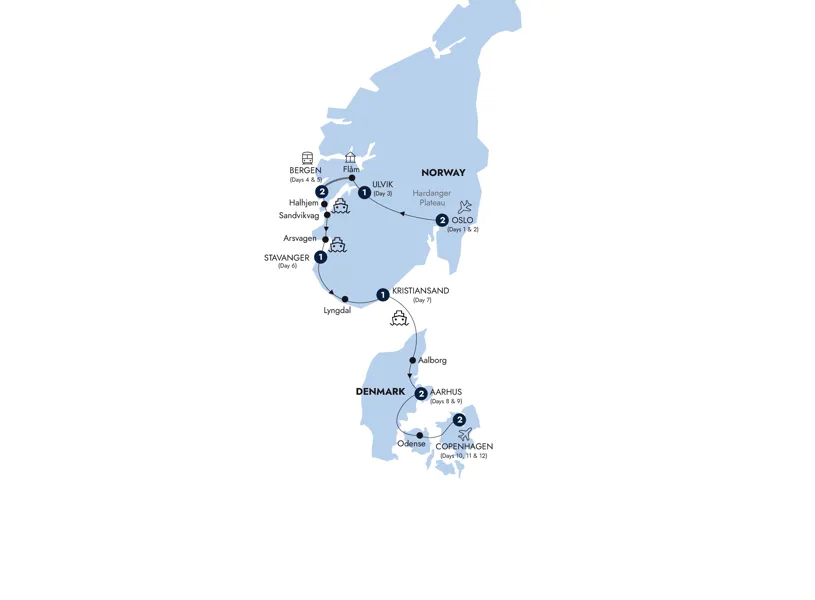
12 Day Tour to Copenhagen, Oslo & Bergen
Insight Vacations
From
$5,125
$4,613


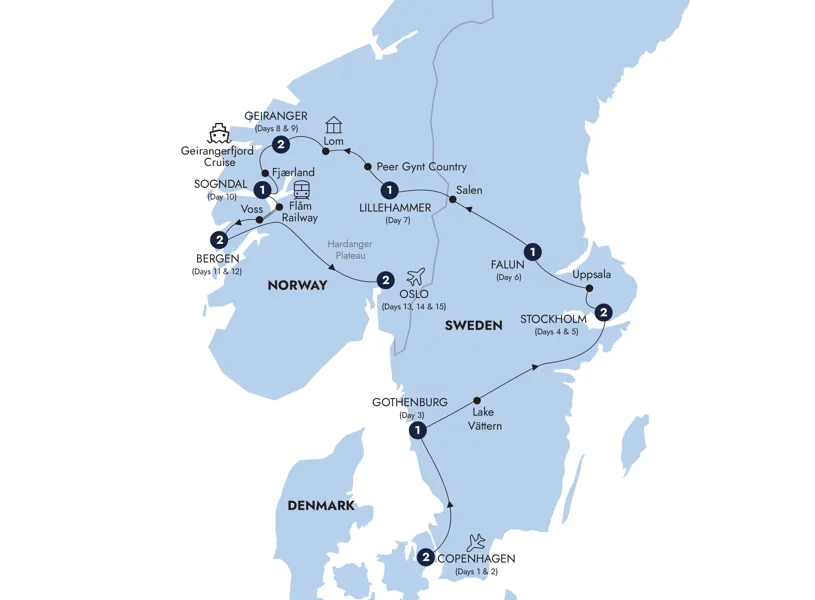
15 Day Tour to Copenhagen, Stockholm & Oslo
From
$7,225
$6,503

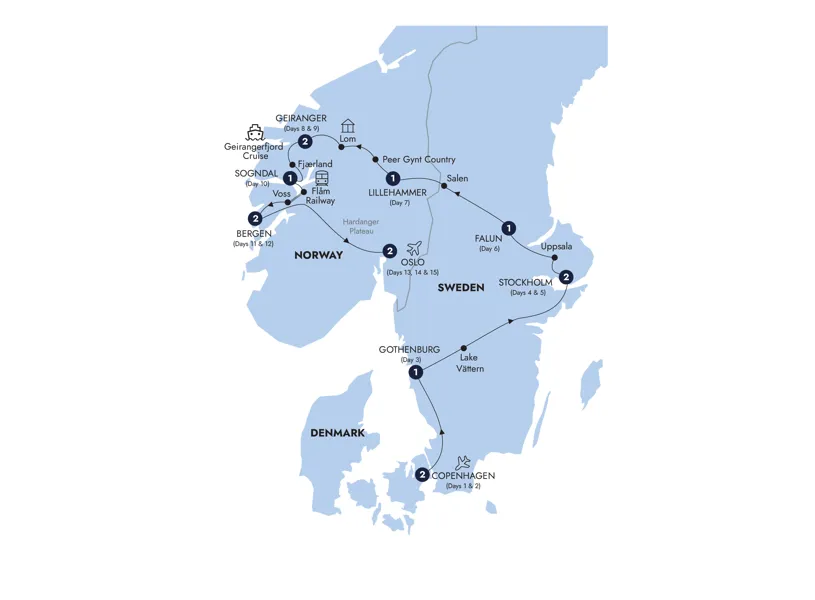
15 Day Tour to Copenhagen, Stockholm & Oslo
From
$8,575
FAQs About Scandinavia Summer Vacations


The best time to visit Scandinavia for a summer vacation is typically from June to August. During these months, the weather is warmer, and the days are longer, with the famous 'Midnight Sun' in the northern parts.
Must-see places include the Norwegian fjords, the Swedish archipelago, Denmark's coastal towns, and Finland's lakes. Each country has its unique attractions, from natural wonders to cultural sites.
While each country has its own language, English is widely spoken throughout Scandinavia, especially in urban areas and tourist spots, making communication easy for English-speaking travelers. When you travel on a tour with us, your Travel Director will speak the local language and handle any and all necessary transactions that require a grasp of the local language.
Scandinavia offers a variety of unique dishes like Swedish meatballs, Norwegian salmon, Danish smørrebrød, Finnish Karelian pies, and various seafood delicacies. Summer is also a great time to try fresh berries and local desserts.
Scandinavians are known for their politeness and respect for personal space. It’s customary to greet with a firm handshake and maintain a sense of personal space in public places.
Pack light, comfortable clothing for warmer days and layers for cooler evenings. A waterproof jacket and good walking shoes are recommended for outdoor activities.
Popular summer activities include hiking, cycling, kayaking, wildlife watching (like spotting reindeer or whales), and enjoying the numerous festivals and outdoor events that take place.
Scandinavia is known for being on the higher end in terms of expenses, but when you travel on a tour, everything is already taken care of, save for a handful of meals. Accommodations, transportation, local experiences, and more are covered in the cost of your trip.


 Free Brochure
Order Your Free Brochure
Sign up to order your FREE travel brochure subscription and get exclusive offers only available to our subscribers
 Download Brochure
 View Brochure Online
 Shop Deals