




Let us guide you to the must-see landmarks, hidden gems, and immersive cultural experiences that Europe has to offer, ensuring an exceptional and memorable journey
12 Spooky Places in Europe:
Haunted Castles, Ghost Stories
& Mysterious Landmarks
Haunted Castles, Ghost Stories
& Mysterious Landmarks

Explore Europe's Most Haunted Places, Historic Castles & Mysterious Destinations
Europe's most mysterious destinations are places where centuries of history have inspired extraordinary legends. From Scotland's haunted castles and Romania's Dracula folklore to the underground catacombs of Paris, historic landmarks across the continent have become associated with ghost stories, unexplained events, and tales of royal intrigue. Behind many of these legends are real historical figures, tragic events, and centuries-old traditions that continue to influence how these remarkable places are remembered.
Some of Europe's most famous haunted places have genuine connections to executions, political betrayals, ancient burial traditions, and medieval conflicts. Others owe their mysterious reputations to local folklore, Gothic literature, or unusual architecture. Whether you believe in ghosts or simply enjoy exploring the darker chapters of European history, these 12 spooky destinations reveal the fascinating relationship between historical events, cultural traditions, and the supernatural.
12 of the Most Haunted and Mysterious Places in Europe

1. Tower of London, England: Anne Boleyn's Ghost & the Princes in the Tower
The Tower of London is one of England's most famous historic landmarks, with a history marked by royal imprisonment, political intrigue, and execution. Founded by William the Conqueror in the 11th century, the fortress overlooking the River Thames has served as a royal residence, treasury, armory, and prison. Its reputation as one of Europe's most haunted castles is closely connected to the dramatic events that unfolded within its walls, particularly during the Tudor period.
One of the Tower's most enduring ghost stories concerns Anne Boleyn, the second wife of King Henry VIII, who was executed on Tower Green in May 1536. Accused of treason, adultery, and incest, Anne was condemned after failing to produce the male heir Henry desperately wanted. According to folklore, her spirit has appeared near the Chapel Royal of St. Peter ad Vincula, where she was buried, sometimes carrying her severed head beneath her arm. Other accounts describe a ghostly procession in which Anne appears accompanied by figures dressed in Tudor clothing.
Another mystery concerns the princes in the Tower, 12-year-old Edward V and his younger brother Richard, Duke of York. The boys were placed in the Tower in 1483 during the political upheaval following the death of their father, King Edward IV. They subsequently disappeared from public view, and their fate remains uncertain, although many historians believe they were murdered. According to ghost stories, two frightened children have occasionally been seen wandering the fortress, their appearances interpreted as the restless spirits of the missing princes.
The Tower's supernatural reputation extends beyond its royal prisoners to the famous birds that inhabit its grounds. According to the legend of the ravens of the Tower of London, the kingdom will fall if the ravens ever abandon the fortress. The birds remain a celebrated part of the Tower's traditions, cared for by a dedicated Ravenmaster. Visitors can also learn about the Yeoman Warders, known as the Beefeaters, and their centuries-old role at the Tower of London, which connects the fortress's military heritage with its present-day ceremonial traditions.

2. Palace of Holyroodhouse, Scotland: Mary, Queen of Scots & the Murder of David Rizzio
At the foot of Edinburgh's Royal Mile, the Palace of Holyroodhouse is the official residence of the British monarch in Scotland and one of the country's most historically significant royal buildings. Its elegant state apartments and connections to the Scottish monarchy conceal a particularly violent chapter of 16th-century history. The palace is closely associated with Mary, Queen of Scots, whose troubled reign continues to inspire stories of betrayal, political conspiracy, and restless spirits.
According to accounts, on the evening of March 9, 1566, Mary was dining in her private apartments with several companions, including her Italian secretary, David Rizzio. A group of armed conspirators entered the palace, supported by Mary's husband, Lord Darnley, who had grown jealous of Rizzio's influence over the queen. The attackers dragged Rizzio from Mary's presence and stabbed him repeatedly, reportedly leaving his body with more than 50 wounds. Mary, who was pregnant at the time, was held captive during the attack, making the murder one of the most shocking episodes of her reign.
According to palace folklore, Rizzio's spirit continues to haunt the rooms where he was killed. Some versions of the story describe unexplained footsteps, muffled cries, and a mysterious stain said to mark the place where his blood was spilled. The supposed stain has become part of the palace's ghostly reputation, although the details of these supernatural accounts cannot be historically verified. The murder itself, however, is well documented and reveals the dangerous political rivalries that surrounded the Scottish monarchy.
Holyroodhouse also stands beside the ruins of Holyrood Abbey, founded in the 12th century, adding another layer of medieval history to the royal complex. The surviving apartments associated with Mary, Queen of Scots, provide a tangible connection to the people and events that shaped Scotland's history. The palace's mysterious reputation is ultimately inseparable from the documented violence, personal betrayal, and political uncertainty that defined Mary's reign.

3. Edinburgh Castle, Scotland: The Phantom Piper & the Headless Drummer
Edinburgh Castle dominates Scotland's capital from Castle Rock, a volcanic formation rising above the city's historic streets. Centuries of warfare, royal intrigue, and imprisonment have inspired numerous ghost stories, making Edinburgh Castle one of Great Britain's most famously haunted landmarks.
One of Edinburgh Castle's most famous legends concerns a mysterious piper who was supposedly sent into underground passages beneath the fortress. According to the story, an entrance to a secret tunnel was discovered, and a young piper was instructed to explore it while playing his bagpipes so that those aboveground could follow his progress by listening to the music. The tune reportedly continued beneath the Royal Mile before suddenly falling silent, leaving the search party unable to determine what had happened. Despite attempts to find him, the piper was never seen again, and folklore maintains that his distant music can still be heard beneath Edinburgh's streets.
Another well-known legend involves a headless drummer who supposedly appeared on the castle battlements before a period of military danger. In some retellings, the apparition is associated with the 17th century and the conflicts that surrounded the Scottish and English crowns. The drummer's appearance is said to foretell disaster, although the story's origins are difficult to establish. Other supernatural tales include ghostly soldiers, unexplained sounds, and the spirits of dogs supposedly seen near the castle's small military dog cemetery.
Edinburgh Castle's history is closely tied to its centuries of military and royal legends, from the Wars of Scottish Independence to the reign of Mary, Queen of Scots, whose son James VI was born within its walls. Today, the castle remains a symbol of Scottish heritage and the setting for the Royal Edinburgh Military Tattoo, where the tradition of Scotland's Lone Piper continues to honor the country's military past. While the ceremonial Lone Piper is distinct from the castle's legendary Phantom Piper, both reflect the enduring place of bagpipes in Scottish history and storytelling.

4. Bran Castle, Romania: Dracula, Vlad the Impaler & Vampire Legends in Transylvania
With its imposing towers, shadowy passageways, and dramatic position high above the forests of Transylvania, Bran Castle looks like the perfect home for a vampire. Known around the world as Dracula's Castle, this medieval fortress in Romania's Carpathian Mountains has become one of Europe's most famous spooky destinations. But the story behind its sinister reputation is more intriguing than fiction alone, bringing together a notorious medieval ruler, centuries-old vampire folklore, and one of literature's most famous villains.
Built in the late 14th century, Bran Castle originally served as a defensive stronghold and customs post along an important trade route between Transylvania and Wallachia. During the following century, neighboring Wallachia was ruled at various times by Vlad III, better known as Vlad the Impaler. His brutal methods of punishing enemies, particularly through impalement, earned him a fearsome reputation across Europe. Vlad was also known as Dracula, a name associated with his father, Vlad Dracul, and one that would later become synonymous with vampires.
In 1897, Irish author Bram Stoker published his novel Dracula, introducing the world to a mysterious Transylvanian count who lived in an isolated castle in the Carpathian Mountains. Stoker borrowed the name Dracula and drew upon European vampire folklore to create his fictional character, whose terrifying story would influence generations of Gothic literature and horror films. Although Vlad the Impaler was not an established resident of Bran Castle, and there is no evidence that the fortress inspired Stoker's novel, its medieval architecture and mountain setting made it a natural symbol of the vampire's fictional home.
Today, Bran Castle's reputation as Dracula's Castle is a fascinating example of how history and imagination can become intertwined. Behind the vampire legend stands a genuine medieval fortress with centuries of Romanian history, while its association with Stoker's fictional count continues to attract visitors from around the world. Exploring Bran Castle's history and Dracula legend reveals how a real historical figure, a Gothic novel, and an atmospheric Transylvanian castle became connected in one of Europe's most enduring supernatural stories.

5. Glamis Castle, Scotland: The Grey Lady & the Monster of Glamis
Glamis Castle, located in Angus in eastern Scotland, is a historic aristocratic residence surrounded by gardens, woodland, and centuries of royal family history. The ancestral seat of the Earls of Strathmore and Kinghorne and the childhood home of Queen Elizabeth The Queen Mother, the castle has long been associated with Scottish nobility and tradition. Yet behind its imposing towers and historic chambers lies a collection of mysterious family secrets and ghost stories that have made Glamis one of Scotland's most famously haunted castles.
Among its most enduring mysteries is the legend of the Monster of Glamis, a family secret supposedly concealed within the castle walls for generations. According to the tale, a child born into the noble family during the 19th century had a severe physical deformity and was secretly confined to a hidden chamber. Only the Earl and his heir were said to know of the child's existence, with the secret passed down through successive generations. Although no reliable historical evidence supports the story, the possibility of a forgotten room and a carefully guarded family secret has kept the legend alive for more than a century.
Another haunting tale centers on Lady Janet Douglas, also known as Lady Glamis, whose tragic fate became intertwined with the castle's supernatural reputation. A Scottish noblewoman caught in the political tensions between her family and King James V, Lady Janet was accused of conspiring against the monarch and using witchcraft to cause his death. In 1537, she was convicted of treason and burned at the stake on Edinburgh's Castle Hill. According to legend, her spirit returned to Glamis Castle, where she became known as the Grey Lady. Visitors and castle residents have reportedly described a shadowy woman dressed in grey appearing near the chapel, sometimes seated silently before vanishing without a trace. Other accounts place her wandering the castle's corridors, her ghostly presence a lingering reminder of one of Scotland's most notorious political executions.
Glamis Castle also holds a place in literary history through William Shakespeare's Macbeth, whose title character becomes Thane of Glamis, although the castle itself was not the historical setting of the play's events. From the mysterious Monster of Glamis to the tragic story of the Grey Lady, the castle's legends draw upon centuries of aristocratic history, political intrigue, and Scottish folklore. Together, they illustrate how Europe's famous castles and royal palaces can preserve both documented history and stories that continue to capture the imagination.

6. Palace of Versailles, France: Marie Antoinette & the Ghosts of French Royalty
The Palace of Versailles, located outside Paris, is best known for its extraordinary Baroque architecture, formal gardens, and association with the French monarchy. Under King Louis XIV, Versailles became the center of royal government and an enduring symbol of absolute monarchy. Yet behind the grandeur of the Hall of Mirrors and lavish royal apartments lies a history of political rivalry, revolution, and the dramatic collapse of royal power.
Among the palace's most famous supernatural associations is the legend of Marie Antoinette, the French queen executed during the Revolution in 1793. On August 10, 1901, two English academics, Charlotte Anne Moberly and Eleanor Jourdain, claimed to have experienced something extraordinary while exploring the gardens of the Petit Trianon, Marie Antoinette's former private retreat. After losing their way, the women described an unsettling change in the atmosphere, with the gardens appearing strangely still and lifeless. They encountered figures dressed in 18th-century clothing, including men wearing tricorn hats and a mysterious stranger with a deeply marked face. Moberly also reported seeing a woman in an old-fashioned dress sketching on the grass, whom she later believed was Marie Antoinette herself.
The women became convinced they had somehow witnessed a scene from the 18th century, an experience that became known as the Moberly-Jourdain incident or the Versailles time slip. After researching historical maps and portraits, they believed several details matched the palace grounds and people associated with the French royal court. Their account, published in the 1911 book An Adventure, attracted considerable attention and debate. Skeptics have suggested the women may have encountered people wearing period costumes or misinterpreted ordinary events, with their memories influenced by subsequent research. Although no supernatural explanation has been verified, the incident remains one of Versailles' most intriguing ghost stories, connecting the palace's royal history with its enduring atmosphere of mystery.

7. Doge's Palace, Venice: The Bridge of Sighs & the Prisoners of Venice
Few places in Venice reveal the darker side of the city's magnificent past quite like Doge's Palace. Overlooking St. Mark's Basin beside St. Mark's Basilica, this Gothic landmark served for centuries as the seat of government of the powerful Venetian Republic. Behind its ornate marble façade and grand ceremonial chambers lay a world of political intrigue, secret investigations, and imprisonment. Its most haunting stories center on the palace's historic prisons and the famous Bridge of Sighs, where prisoners supposedly caught their final glimpse of Venice before disappearing into their cells.
During the Venetian Republic, Doge's Palace housed the courts and government authorities responsible for administering justice. Suspected criminals, political opponents, and others accused of threatening the Republic could find themselves confined in the palace's prison cells. Among the most feared were the Pozzi, or Wells, a series of cramped, poorly ventilated cells on the lower levels of the palace. Later, additional prisons were constructed across the narrow Rio di Palazzo canal, connected to the palace by an enclosed limestone passageway that became known as the Bridge of Sighs.
According to popular legend, the bridge earned its romantic name from the sorrowful sighs of prisoners who paused at its small, stone-covered windows to look out over Venice one last time before entering their cells. Although the name became popular centuries after the bridge was constructed in the early 17th century, the story has endured as one of Venice's most evocative traditions. Through the bridge's narrow openings, prisoners could glimpse the lagoon and surrounding buildings, a stark contrast to the confinement awaiting them on the other side.
One of the palace's most famous prisoners was Giacomo Casanova, the Venetian adventurer and writer arrested in 1755 and imprisoned in the Piombi, cells located beneath the palace's lead-covered roof. Accused of offenses against religion and public morals, Casanova spent more than a year in captivity before carrying out a daring escape in 1756. His detailed account of the escape, involving a concealed iron tool and a route across the palace roof, became one of the most celebrated prison-break stories in European history.
Today, visitors traveling through Italy's famous lagoon can explore the contrast between the splendor of Venice's former rulers and the harsh realities of its judicial system. The palace's historic prison corridors, heavy doors, and enclosed passageways offer an atmospheric reminder of the people once held behind its walls. While the Bridge of Sighs owes much of its haunting reputation to legend, the documented history of political imprisonment, secrecy, and Casanova's extraordinary escape makes Doge's Palace one of Venice's most compelling places to explore the darker side of European history.

8. Kylemore Abbey, Ireland: The White Horse Legend of Connemara
Kylemore Abbey stands beside a lake in the mountainous Connemara region of County Galway, one of Ireland's most striking landscapes. Originally built as Kylemore Castle in the 19th century by Mitchell Henry, the estate later became home to a community of Benedictine nuns. Its Gothic Revival architecture, lakeside setting, and surrounding mountains create a dramatic appearance that has inspired stories of mystery and the supernatural.
Among the abbey's best-known local legends is the tale of a mysterious white horse that supposedly emerges from the lake once every seven years. The apparition is sometimes described as a beautiful horse rising from the water before disappearing, a story that echoes the importance of supernatural animals and enchanted landscapes in Irish folklore. The legend gained renewed attention in 2011, when staff at Kylemore Abbey noticed unusual formations of white spray moving across the lake during windy conditions. The shapes resembled a horse racing across the water, offering a natural explanation for an event that recalled the traditional legend.
Kylemore's surrounding landscape is also associated with stories of giants and enchanted animals. One tale concerns the legendary Irish heroes Fionn mac Cumhaill and Cú Chulainn, whose adventures are woven into the mythology of Connemara's mountains and lakes. In another local story, a giant who terrorized the people of the valley was eventually defeated by a young man who approached him in disguise. These tales demonstrate how the region's natural features became settings for stories passed down through generations.
Kylemore's documented history is equally compelling. Mitchell Henry commissioned the castle as a family residence, while the nearby Gothic church was built as a memorial to his wife, Margaret, following her death in 1874. The estate's transformation from private castle to Benedictine abbey connects Victorian architecture with the history of Irish religious communities. The white horse legend adds another dimension to a place already associated with personal loss, remembrance, and the distinctive cultural landscape of western Ireland.

9. Prague Astronomical Clock, Czech Republic: The Blinded Clockmaker & the Curse of Time
Prague's Astronomical Clock, known locally as the Orloj, is one of Europe's most remarkable medieval mechanical landmarks. Installed on the Old Town Hall in 1410, the clock displays astronomical information through an intricate system of dials, moving figures, and symbolic representations of the passage of time. Its elaborate design reflects the scientific knowledge and religious beliefs of medieval Bohemia, while a centuries-old legend has given the clock a particularly mysterious reputation.
According to the most famous story, the clock was created by a master craftsman named Hanuš, whose extraordinary achievement attracted admiration throughout Prague. The city's councillors supposedly became concerned that Hanuš might construct an equally impressive clock for another European city, diminishing Prague's prestige. To prevent this, they allegedly arranged for the clockmaker to be blinded, ensuring that he would never again create a similar masterpiece. The betrayal transformed a story of medieval ingenuity into one of jealousy, cruelty, and revenge.
In the legend's dramatic conclusion, the blinded Hanuš returned to the clock and deliberately damaged its mechanism, bringing the intricate machinery to a halt. Some versions claim that the clock remained broken for many years because no other craftsman possessed the knowledge required to repair it. Others suggest that the clockmaker placed a curse upon the mechanism, condemning Prague to misfortune whenever the clock stopped. Although the story has become part of the city's folklore, historical records identify Mikuláš of Kadaň and astronomer Jan Šindel with the original 1410 mechanism, while Hanuš was associated with later improvements.
The clock's moving figures add another layer of symbolism to its mysterious reputation. A skeletal figure representing Death rings a bell and turns an hourglass, reminding observers of the passage of time and the inevitability of mortality. The procession of the Twelve Apostles connects the astronomical mechanism with medieval Christian traditions, while the calendar and celestial displays reflect the scientific achievements of the period. Exploring the history and legends of Prague's famous Astronomical Clock reveals how medieval engineering, religious symbolism, and local folklore became intertwined in one of the Czech Republic's most celebrated landmarks.

10. Predjama Castle, Slovenia: The Knight, the Secret Tunnels & a Fatal Betrayal
Predjama Castle is one of Europe's most unusual medieval fortresses, constructed directly into the entrance of a towering limestone cliff in southwestern Slovenia. The castle's remarkable setting combines medieval defensive architecture with the natural caves and rock formations of the Karst region. Its dramatic appearance has made it a celebrated landmark, while the story of its most famous resident has inspired centuries of legend.
During the 15th century, the knight Erazem of Predjama became associated with a prolonged conflict against Habsburg forces. According to popular legend, Erazem resisted a siege of the castle by using secret passages through the cave system to obtain supplies, frustrating his enemies. The besieging soldiers supposedly believed they could starve him into surrender, only to discover that food continued to appear within the seemingly isolated fortress. Some versions of the story even claim that Erazem mocked his attackers by throwing fresh cherries from the castle walls, demonstrating that their blockade had failed.
The siege reportedly ended when someone within the castle betrayed Erazem by revealing a vulnerable moment in his daily routine. According to the most famous version of the tale, a signal was given when the knight entered the castle's privy, allowing the attackers to direct their artillery toward the exposed structure. Erazem was killed, bringing an end to his defiance of the Habsburg authorities. Other versions of the story differ on the identity of the betrayer and the circumstances of his death, demonstrating how historical events can become embellished through centuries of retelling.
The legend of Erazem continues to shape Predjama Castle's mysterious reputation, with local stories suggesting that his restless spirit remains within the fortress. More significantly, the castle demonstrates how medieval builders adapted military architecture to challenging natural landscapes. Its cave passages, defensive position, and connection to the political conflicts of Central Europe make Predjama an exceptional example of a historic site where geography and legend are inseparable.

11. Chapel of Bones, Portugal: Évora's Haunting Reminder of Mortality
In the historic Portuguese city of Évora, the Capela dos Ossos, or Chapel of Bones, presents one of Europe's most unusual and thought-provoking religious interiors. Constructed in the 16th and 17th centuries by Franciscan friars, the chapel forms part of the Church of São Francisco. Its walls and columns are decorated with human skulls and bones, traditionally said to represent the remains of approximately 5,000 people.
The chapel was designed to communicate the Christian concept of memento mori, a Latin expression meaning "remember that you must die." Rather than serving as a place intended to frighten visitors, the arrangement of human remains is intended to encourage reflection on mortality, humility, and the temporary nature of earthly life. An inscription above the entrance, commonly translated as "We bones that are here await yours," reinforces this message. The contrast between the chapel's religious purpose and its unsettling appearance makes it one of Portugal's most distinctive historic landmarks.
The human remains used to decorate the chapel are associated with the transfer of bones from burial grounds, reflecting historical concerns about cemetery space and the treatment of the dead. Skulls and long bones were arranged in deliberate patterns across the walls and pillars, transforming the interior into an architectural expression of mortality. The chapel's design was intended to confront worshippers with the inevitability of death while encouraging reflection on spiritual life and the passage of time.
Évora's Chapel of Bones reflects a broader European tradition of ossuaries, charnel houses, and religious art concerned with death and remembrance. Similar themes appear in medieval paintings, funerary monuments, and religious architecture throughout Europe. The chapel is particularly significant because its unusual appearance communicates a deeply rooted spiritual and philosophical tradition rather than a conventional ghost story.

12. Paris Catacombs, France: The City of the Dead Beneath the City of Light
Paris, France, may be known as the City of Light, but beneath its grand boulevards, magnificent monuments, and lively cafés lies another Paris, hidden in darkness and steeped in centuries of history. While roughly two million people call the French capital home today, the remains of an estimated six million others rest in the Catacombs beneath its streets, inspiring the haunting observation, “There are more dead beneath Paris than living above it.” As, about 65 feet below the city, where limestone was once quarried to build the Paris we know today, a vast underground ossuary took shape in the late 18th century when authorities began relocating remains from overcrowded cemeteries. Born of necessity, these silent passages became an extraordinary monument to generations of Parisians, and a hidden world where the city's past rests beneath the footsteps of the living.
Only a small portion of this underground world is accessible to visitors through the site known as the Catacombs of Paris. Along the public route, skulls and bones form carefully arranged walls, with additional remains resting behind them. At the entrance to the ossuary, a stone inscription delivers an unforgettable warning: “Arrête! C'est ici l'empire de la mort,” meaning “Stop! This is the empire of death.” The solemn atmosphere and seemingly endless rows of human remains make the experience unlike almost anywhere else in Europe.
Beyond its documented history, the Catacombs have inspired stories of unexplained footsteps, distant voices, and mysterious encounters in the darkness. Legends tell of people becoming lost in the underground passages and spirits wandering the tunnels long after their remains were brought there. Although these accounts belong to folklore rather than established history, the labyrinthine setting has helped make the Catacombs one of Europe's most famously unsettling landmarks.
Like Portugal's Chapel of Bones, the Paris Catacombs reveal how earlier societies confronted death through architecture and the preservation of human remains. Yet their story is distinctly Parisian, shaped by the city's expanding population, its former limestone quarries, and the transformation of its burial practices. Visiting the Paris Catacombs offers a rare opportunity to experience a side of the French capital that few would imagine exists beneath its streets. Beyond their remarkable visual impact, the carefully arranged remains invite reflection on the passage of time, the lives of earlier generations, and the ways societies have honored their dead. It is a place where history feels remarkably close, offering a perspective on Paris that extends beyond its celebrated and above-ground landmarks.
Why Are So Many European Castles and Historic Landmarks Considered Haunted?
Europe's reputation for haunted castles and mysterious landmarks is closely connected to its long history of warfare, monarchy, religious conflict, and political upheaval. Medieval fortresses such as the Tower of London, Edinburgh Castle, and Bran Castle were built for defense and authority, often becoming settings for imprisonment, betrayal, and violent struggles for power. Over generations, these documented events inspired stories of ghosts and supernatural encounters that became part of local cultural traditions.
Architecture also plays an important role in how haunted places are perceived. Gothic churches, underground passages, ruined abbeys, and fortified castles often contain features that encourage mystery, including narrow corridors, vaulted chambers, weathered stone, and secluded courtyards. The Gothic literary tradition, particularly works such as Bram Stoker's Dracula, reinforced the association between medieval European settings and supernatural storytelling.
Not every mysterious landmark is associated with ghosts. Prehistoric monuments such as Stonehenge in England inspire questions about ancient beliefs, ceremonial practices, and the engineering achievements of early societies. While the mysteries of Stonehenge and its prehistoric origins are fundamentally different from medieval ghost stories, both reflect the enduring human desire to understand places whose histories are only partly known.
European folklore has also been shaped by regional traditions. Scottish ghost stories frequently draw upon castles, battlefields, and royal history, while Irish legends often connect supernatural beings and apparitions with lakes, ancient ruins, and rural landscapes. In Central and Eastern Europe, medieval fortresses and vampire literature have contributed to the mysterious reputations of places such as Transylvania and Predjama Castle.
Beyond Ghost Stories: Europe's Fascination With Mystery and the Supernatural
Europe's mysterious heritage extends beyond haunted castles and underground burial chambers. Historic cities contain legends about medieval astronomers, alchemists, religious figures, and unexplained events that have become part of their cultural identities. Prague's Astronomical Clock demonstrates how stories of curses and betrayal can become associated with remarkable scientific achievements, while the Paris Catacombs reveal how changing burial practices can create places that inspire both historical curiosity and unease.
These traditions demonstrate how European societies have used storytelling to interpret the unfamiliar, explain historical events, and preserve cultural memories. Some legends originated as moral warnings, while others grew from political rivalries, religious beliefs, or attempts to explain unusual natural phenomena. Understanding these distinctions adds depth to the experience of visiting historic landmarks and helps separate documented events from the stories that developed around them.
For culturally curious travelers, Europe's spooky destinations offer much more than ghost stories. They reveal how architecture, literature, religion, and historical memory interact across different countries and centuries. Whether exploring Scotland's royal fortresses, Romania's medieval castles, or France's underground ossuaries, the most compelling mysteries often begin with real events that continue to influence how these places are remembered.

9 Day tour from Bucharest to Budapest
Trafalgar
From
$2,450
$2,205


9 Day Tour to Edinburgh & the Scottish Highlands
From
$4,750
$4,275


16 Day Tour to Romania, Croatia, Sofia & Budapest
From
$5,595
$5,036



13 Day Germany & Austria Tour from Frankfurt
From
$4,175
$3,758


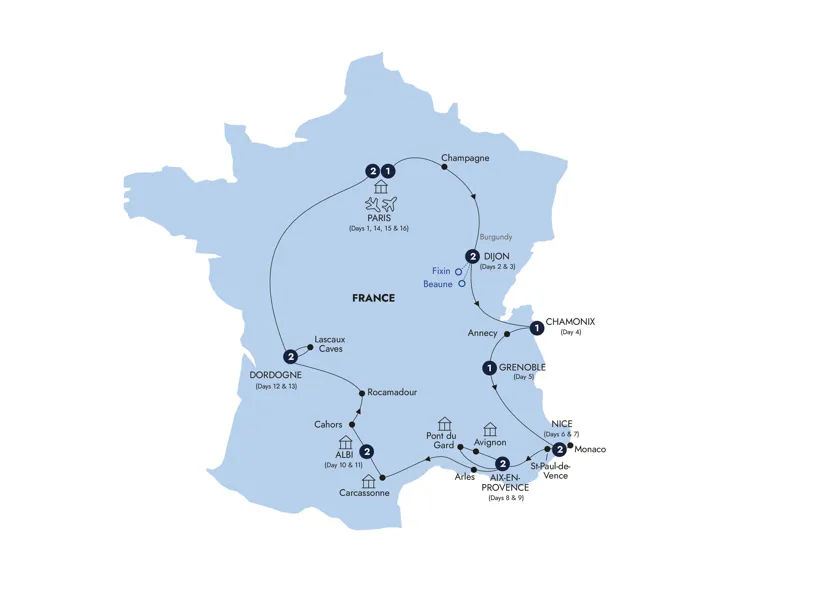
16 Day France Tour to Paris, Dijon & Monaco
From
$6,950
$6,116
9 Day Tour to Edinburgh & the Scottish Highlands
From
$4,750
$4,275


13 Day Scotland Tour of Edinburgh, Glasgow
From
$5,395
$4,856



20 Day Tour to London, Dublin & Edinburgh
From
$8,675
$7,374


8-Day Seine River Cruise Through Normandy
Trafalgar River Cruises
From
$3,499
$2,799


Frequently Asked Questions About Haunted Places in Europe


Some of Europe's most famous supposedly haunted places include the Tower of London in England, Edinburgh Castle and Glamis Castle in Scotland, Bran Castle in Romania, and Predjama Castle in Slovenia. These historic landmarks are associated with stories of royal executions, mysterious disappearances, medieval betrayals, and supernatural encounters. Their reputations are rooted in a combination of documented history, local folklore, and literary traditions rather than verified paranormal activity.
There is no verified ranking of Europe's most haunted castles, but the Tower of London and Edinburgh Castle are among the best known for their ghost stories. The Tower of London is associated with Anne Boleyn, Lady Jane Grey, and the Princes in the Tower, while Edinburgh Castle is famous for its legend of the Phantom Piper. Glamis Castle in Scotland and Bran Castle in Romania are also frequently included in discussions of Europe's mysterious historic fortresses.
Bran Castle is widely marketed as Dracula's Castle because of its Gothic appearance and location in Transylvania, but there is no established evidence that it inspired Bram Stoker's fictional castle. The historical Vlad the Impaler, who is often associated with the Dracula legend, had no substantial documented connection to Bran Castle. Its association with vampires developed primarily through literature, popular culture, and tourism.
The Tower of London is considered haunted because of its history as a royal prison and execution site, particularly during the Tudor period. Famous prisoners included Anne Boleyn and Lady Jane Grey, whose tragic deaths inspired stories of ghostly appearances. The mysterious disappearance of the Princes in the Tower and the legend of the resident ravens further contribute to the fortress's supernatural reputation.
On August 10, 1901, two English academics, Charlotte Anne Moberly and Eleanor Jourdain, claimed to have encountered people dressed in 18th-century clothing while exploring the gardens of the Petit Trianon at Versailles. One woman reportedly saw a figure she later believed was Marie Antoinette, leading the pair to speculate that they had somehow witnessed a scene from the past. Their account was published in 1911 as An Adventure and became known as the Moberly-Jourdain incident. Although skeptics have proposed explanations involving period costumes, memory, and misinterpretation, the story remains one of Versailles' most famous supernatural legends.
According to a famous Prague legend, the master clockmaker Hanuš was blinded by city councilors who feared he might build an equally impressive clock elsewhere. In revenge, he supposedly damaged the clock's mechanism, causing it to stop for many years. Historical records identify Mikuláš of Kadaň and astronomer Jan Šindel with the original 1410 mechanism, while Hanuš contributed to later improvements. The legend remains an important part of Prague's cultural folklore.
Europe's mysterious historical sites include Stonehenge in England, the Paris Catacombs in France, the Chapel of Bones in Portugal, and Predjama Castle in Slovenia. These landmarks represent different kinds of mystery, from prehistoric engineering and ancient ceremonial practices to burial traditions and medieval military history. Their significance comes from the historical questions they raise and the cultural stories that have developed around them.
The Paris Catacombs have inspired numerous ghost stories, but there is no reliable scientific evidence that they are haunted. Their unsettling reputation comes largely from the millions of human remains transferred into former limestone quarries beginning in the late 18th century. The catacombs are historically significant for what they reveal about Parisian burial customs, public health, and the development of the city.
Ghost stories are prominent in Scottish and Irish folklore because both countries have rich oral storytelling traditions connected to historic castles, ancient religious sites, landscapes, and local beliefs. In Scotland, many legends concern royal figures, military conflicts, and medieval fortresses such as Edinburgh Castle and Glamis Castle. In Ireland, supernatural traditions frequently involve lakes, ruined abbeys, ancestral homes, and figures from Celtic folklore.
Nope. Europe's supposedly haunted landmarks offer considerable historical, architectural, and cultural interest regardless of personal beliefs about the supernatural. Places such as Bran Castle, Holyroodhouse, the Tower of London, and the Paris Catacombs reveal important aspects of European monarchy, religious traditions, literature, and social history. Their legends add another dimension to understanding how communities interpret and remember the past.
You Might Also Like


 Free Brochure
Order Your Free Brochure
Sign up to order your FREE travel brochure subscription and get exclusive offers only available to our subscribers
 Download Brochure
 View Brochure Online
 Shop Deals