




The Piazza dei Miracoli, or Square of Miracles, captures the artistic and spiritual essence of medieval Pisa, Italy. A guided tour offers deeper context for Pisa’s historic and artistic treasures. Knowledgeable guides share the stories behind the Leaning Tower, the cathedral, and the Square of Miracles.
What to See in the Square
of Miracles in Pisa, Italy
of Miracles in Pisa, Italy

The Square of Miracles: Pisa’s Cultural Heart
The Piazza dei Miracoli, or Square of Miracles, captures the artistic and spiritual essence of medieval Pisa. Surrounded by green lawns and gleaming white marble, this UNESCO World Heritage Site holds four masterpieces that define the city’s heritage. Visitors are struck by the harmony of Romanesque design and the lasting sense of reverence that fills the square.
The cathedral, baptistery, tower, and cemetery reflect a time when Pisa’s influence reached across the seas. Together, they express faith, creativity, and the human desire to reach toward the heavens.

The Leaning Tower of Pisa
The Leaning Tower is among the most recognizable structures in the world. It began tilting during construction in the 12th century because of Pisa’s soft ground, yet it still stands strong after centuries of careful restoration. Its eight stories, adorned with carved arcades and columns, rise gracefully despite the incline. The tower’s resilience makes it more than a symbol of Italy. It is a testament to balance, innovation, and the beauty found in imperfection.

The Baptistery of St. John
The Baptistery, dedicated to St. John, is the largest in Italy. Its circular form and layered marble exterior create an elegant contrast to the nearby cathedral. The acoustics inside are remarkable. When a single note is sung, it lingers and harmonizes, creating an effect that feels almost otherworldly. Sculptural details, including the pulpit by Nicola Pisano, combine classical and Gothic elements that bridge the eras of art and faith.
The Camposanto Monumentale
The Camposanto, or monumental cemetery, completes the Square of Miracles. Legend says its soil was brought back from the Holy Land during the Crusades. The long, graceful cloister surrounds ancient sarcophagi and fading frescoes that once glowed with color. Walking here invites quiet reflection. The site holds centuries of history and artistry within its peaceful walls.

The Cathedral of Santa Maria Assunta
At the heart of the square stands the Cathedral of Santa Maria Assunta, a brilliant example of Pisan Romanesque architecture. The façade features striped marble, sculpted arches, and bronze doors that reflect light beautifully. Inside, golden mosaics shimmer beneath the ornate ceiling, and Giovanni Pisano’s pulpit tells sacred stories through detailed carvings. The cathedral honors the city’s devotion and artistry. Each stone reflects the ambition of a medieval power that once commanded Mediterranean trade.
Pisa’s Artistic Legacy
Pisa’s golden age produced artists, architects, and thinkers whose work shaped Italy’s cultural identity. The city’s Romanesque style, characterized by alternating marble bands and rounded arches, influenced cathedrals throughout Tuscany.
Modern visitors still feel this legacy. Each building tells a story of devotion, experimentation, and the quest for beauty that defines Italy’s enduring charm.
Sculpture and Symbolism
Every surface in the Square of Miracles carries meaning. Columns depict biblical figures, animals, and symbolic motifs that merge faith with the natural world. This visual storytelling invites visitors to look closely, discovering the beliefs and artistry of medieval craftsmen.
Harmony in Design
The four monuments share a unified vision. Each structure aligns with the others in form and proportion, creating a balance that mirrors the medieval view of divine order. The result is a space that feels both grounded and celestial.







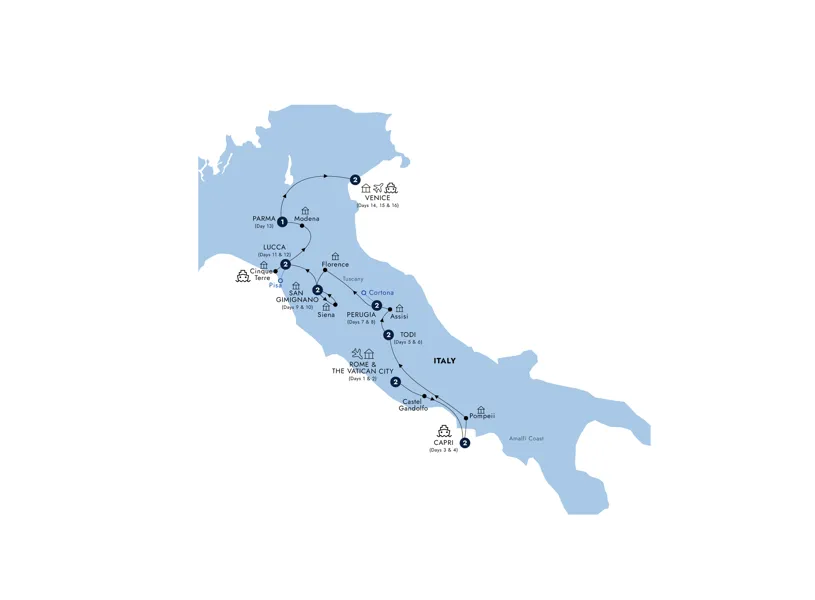
16 Day Italy Tour to Venice, Lucca & Perugia
From
$6,750
$6,075


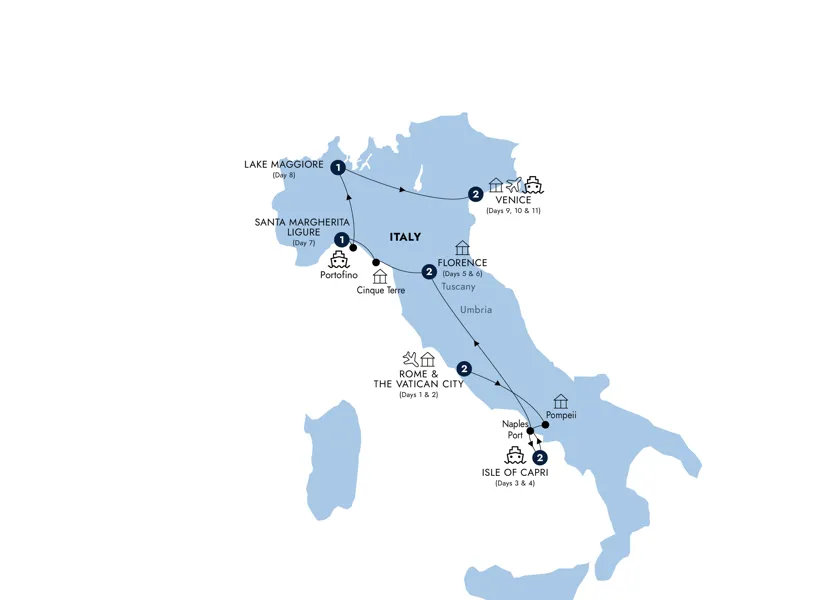
11 Day Tour to Isle of Capri, Venice & Florence
From
$5,475
$4,928
Frequently Asked Questions About Guided Tours of Pisa


A guided tour offers deeper context for Pisa’s historic and artistic treasures. Knowledgeable guides share the stories behind the Leaning Tower, the cathedral, and the Square of Miracles, helping travelers appreciate the craftsmanship and symbolism often missed on a quick visit.
Guided travel also allows you to experience Pisa as part of a broader Italian journey, connecting its art and architecture to other cultural centers like Florence, Siena, or Rome, with comfort and insight throughout.
It is a UNESCO World Heritage Site that includes the Leaning Tower, the Cathedral of Santa Maria Assunta, the Baptistery, and the Camposanto Monumentale.
The tower leans because of the soft, unstable soil beneath it. Engineers have stabilized it over time so visitors can safely admire its unique angle.
Yes. Visitors can enter both to admire the art and architecture, including intricate carvings and mosaics.
Yes. It is open for quiet exploration and appreciation of the ancient frescoes and tombs.
Pisa blends maritime history with artistic innovation. Its monuments stand together as symbols of faith, learning, and timeless design.
You can always do the classic “holding up the tower” pose, but if you're looking for something different try creative angles that frame the tower through the arches of the cathedral or the columns of the Baptistery. Capture reflections in puddles or polished stone for artistic symmetry. Early morning and late afternoon light create soft shadows and golden tones that highlight the marble details. Including nearby statues or people for scale can also create striking, memorable images.
If You're Interested in Touring Pisa's Square of Miracles in Italy, You Might Also Like


 Free Brochure
Order Your Free Brochure
Sign up to order your FREE travel brochure subscription and get exclusive offers only available to our subscribers
 Download Brochure
 View Brochure Online
 Shop Deals