




France is famous for its cuisine. Travel there yourself and try as many varieties of bread and pastry that you can!
Ordering Like a Local
at a French Bakery

France is a dream destination for anyone who loves good food, especially when it comes to freshly baked bread and pastries. From warm croissants and crusty baguettes to colorful macarons, delicate tarts, and regional specialties, a visit to a French boulangerie or pâtisserie is an experience all its own. To help you know what to look for and order with confidence, we've put together essential French bakery terms, useful phrases, and plenty of breads and pastries worth trying.
Fair warning: we're about to describe some seriously tempting French pastries. If you're already hungry, you may want to grab a snack before reading. Might we suggest a croissant or a few slices of baguette to get you in the spirit?
Common French Phrases to Start
Before learning the names of specific French breads and pastries, it helps to know a few everyday phrases. A simple bonjour, s'il vous plaît, and merci can go a long way when ordering at a bakery, café, or pâtisserie. A translation app can help with anything more complicated, but these French basics are a great place to start.
- Hello - Bonjour
- Please - S'il vous plaît
- Thank you - Merci
- Goodbye - Au revoir
- Excuse me - Excusez-moi
- I would like... - Je voudrais...
- What do you recommend? - Qu'est-ce que vous recommandez ?
- One of these, please - Un comme ça, s'il vous plaît.
Basic French Bakery Terms to Know
You don't need to memorize an entire French pastry dictionary before your trip. Learning a handful of common terms can help you know where to shop, understand what you're looking at in the display case, and recognize some of the ingredients and fillings you'll encounter.
Many familiar bakery favorites already go by their French names in English, including croissant, baguette, éclair, quiche, and tarte. Once you know a few words for common flavors and ingredients, it becomes much easier to tell a raspberry tart from an apple tart or a chocolate éclair from a coffee one.
Boulangerie - A bakery specializing in bread and other baked goods. This is where you'll typically go for baguettes, loaves of bread, croissants, and other everyday favorites.
Pâtisserie - A pastry shop specializing in cakes, tarts, éclairs, macarons, and other sweet pastries and desserts.
Pain (pronounced roughly "pan," with a nasal vowel) - The French word for bread. You'll see it used in the names of many different breads and baked goods.
Pain au chocolat - A flaky, buttery pastry made from laminated dough and filled with chocolate. Despite sometimes being called a "chocolate croissant" in English, it has its own name and distinctive rectangular shape.
Pâte à choux - A light pastry dough used to make éclairs, profiteroles, cream puffs, and other French pastries. It puffs as it bakes, creating a hollow center that can be filled with cream or other fillings.
Crème pâtissière - Also known as pastry cream, this thick, creamy custard is a staple of French baking. It's commonly used to fill éclairs, fruit tarts, mille-feuille, and many other pastries.
Crème chiboust - A lightened pastry cream traditionally made by combining crème pâtissière with Italian meringue. It's famously associated with the classic French Saint-Honoré cake.
Common French Flavors & Ingredients to Know
Knowing a few French words for popular fruits, nuts, and fillings makes navigating the pastry case much easier.
| English | French | English | French |
|---|---|---|---|
| Strawberry | Fraise | Lemon | Citron |
| Apple | Pomme | Almond | Amande |
| Raspberry | Framboise | Coffee | Café |
| Pear | Poire | Walnut | Noix |
| Chocolate | Chocolat | Vanilla | Vanille |
| Pistachio | Pistache | Caramel | Caramel |
| Hazelnut | Noisette | Apricot | Abricot |
| Ham | Jambon | Cheese | Fromage |
Keep an eye out for combinations of these words on signs and labels. For example, tarte aux pommes is an apple tart, éclair au chocolat is a chocolate éclair, and croissant aux amandes is an almond croissant. Learning just a few key ingredients can make a French pastry case much easier, and more fun, to explore.
Top French Pastries to Know & Try
Now that you know a few French phrases and bakery basics, it's time for the best part: choosing what to eat. From delicate choux pastries filled with cream to buttery Breton specialties and caramelized apple tarts, France has no shortage of tempting options. Here are some classic French pastries and desserts to look for at boulangeries and pâtisseries during your trip.
Profiteroles - Small choux pastry puffs traditionally filled with cream or ice cream and served with warm chocolate sauce. They're often served together as a plated dessert, making them a particularly decadent way to finish a meal.
Religieuse - Two cream-filled choux pastries, one larger than the other, stacked together and covered with icing. Chocolate and coffee are traditional flavors, although you'll find plenty of variations.
Brioche - A rich, buttery French bread with a soft, tender texture and slightly sweet flavor. Enjoy it plain or look for versions filled or topped with chocolate, fruit, praline, or other sweet additions.
Paris-Brest - Created in honor of the Paris-Brest-Paris bicycle race, this ring-shaped choux pastry resembles a bicycle wheel. It's traditionally filled with a rich praline cream and often finished with sliced almonds and powdered sugar.
Canelé - A small specialty from Bordeaux with a deeply caramelized exterior and a soft, custardy center traditionally flavored with vanilla and rum. The contrast between the crisp outside and tender interior is what makes a good canelé particularly special.
Beignet - France's answer to a doughnut comes in many forms, depending on where you are. These fried pastries can be light and airy or more substantial, sometimes filled with fruit or cream and often finished with a dusting of sugar.
Choux à la crème - A classic French cream puff made from airy pâte à choux and filled with cream, often crème pâtissière or whipped cream. Simple, light, and endlessly adaptable, you'll find versions flavored with everything from vanilla and chocolate to coffee and praline.
Mille-feuille - Meaning "a thousand leaves," mille-feuille gets its name from its many delicate layers of crisp puff pastry. The pastry is traditionally layered with crème pâtissière and finished with powdered sugar or icing. It's related to what Americans often call a Napoleon, although the terms aren't always used interchangeably.
Kouign-amann - This Breton specialty from Brittany is made by folding generous amounts of butter and sugar into laminated dough. As it bakes, the sugar caramelizes around the buttery layers, creating a pastry that's crisp and caramelized outside and tender inside.
Gâteau Basque - A traditional specialty of the French Basque Country made with a buttery pastry crust. It's typically filled with either pastry cream or black cherry preserves, with variations depending on where you find it.
Tarte Tropézienne - Also known as La Tarte Tropézienne, this Saint-Tropez specialty consists of a round, sugar-topped brioche filled with a light cream. The pastry became famous in the 1950s, when actress Brigitte Bardot reportedly suggested its now-famous name while filming And God Created Woman in Saint-Tropez.
Saint-Honoré - Named for the patron saint of bakers and pastry chefs, this elaborate French dessert combines puff pastry, choux pastry, caramel-coated cream puffs, cream, and traditionally crème Chiboust. With several classic French pastry techniques packed into one dessert, it's an excellent choice when you want to try something a little more elaborate.
Tarte Tatin - France's famous upside-down apple tart is made by caramelizing apples with butter and sugar before baking them beneath a layer of pastry. The tart is then inverted for serving, revealing glossy, deeply caramelized apples on top.
Top French Breads to Know & Try
Beyond the Baguette
The baguette may be France's most famous loaf, but step inside a French boulangerie and you'll find plenty more to try. From rustic country loaves to walnut-studded breads and regional specialties, French bread comes in an impressive variety of shapes, textures, and flavors. Here are a few to look for during your trip.
Boule - One of the most recognizable traditional French bread shapes, the boule is a large, round loaf with a crisp crust and substantial interior. Its name simply means "ball" in French, and the word boulangerie shares its linguistic roots with this traditional round shape. Because a boule is thicker than a baguette, its interior tends to stay soft longer after baking.
Pain de Campagne - Literally "country bread," pain de campagne is a rustic French loaf traditionally made with wheat flour, often combined with a small amount of rye or whole-grain flour. Recipes vary considerably from bakery to bakery, but you can generally expect a hearty crust, chewy interior, and slightly tangy flavor.
Miche - A miche is a large, round country-style loaf, often made with whole-grain or less-refined flour. Its substantial size and thick crust help it stay fresh longer, making it a traditional bread meant to last for several days.
Ficelle - Meaning "string" in French, a ficelle looks like an especially long, slender baguette. Its narrow shape gives it a higher proportion of crisp crust to soft interior, making it a good choice if the crunchy exterior is your favorite part of a baguette.
Pain aux Noix - Walnut bread made by incorporating pieces of walnut into the dough. Depending on the bakery, the base may be white, whole wheat, or another rustic bread dough. Its nutty flavor makes it particularly good alongside French cheeses.
Pain Bis - A darker, more rustic bread made with flour that retains more of the wheat grain than standard white flour. The result is generally a heartier loaf with a deeper flavor and darker crumb than traditional white French bread.
Pain Brié - A dense, tightly crumbed bread traditionally associated with Normandy. Its name comes from an old technique of vigorously pounding and working the dough, which produces its distinctive firm, compact texture. Despite the similar-sounding name, it has nothing to do with Brie cheese.
No matter which loaf catches your eye, don't be afraid to point and ask for what looks good. French boulangeries often make several breads using different flours, grains, seeds, and traditional recipes, so trying something beyond the familiar baguette is an easy way to experience another side of French baking.




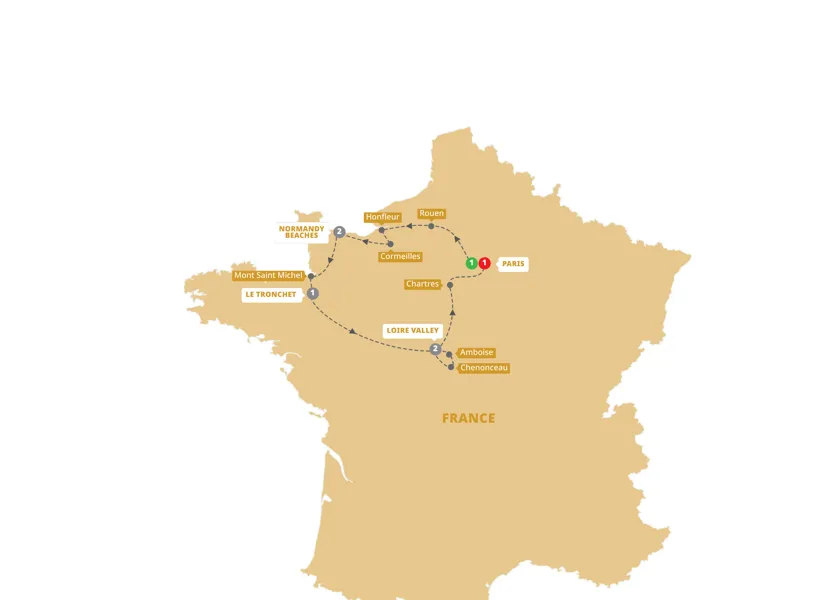
8 Day France Tour of D-Day Beaches
From
$2,495
$2,246

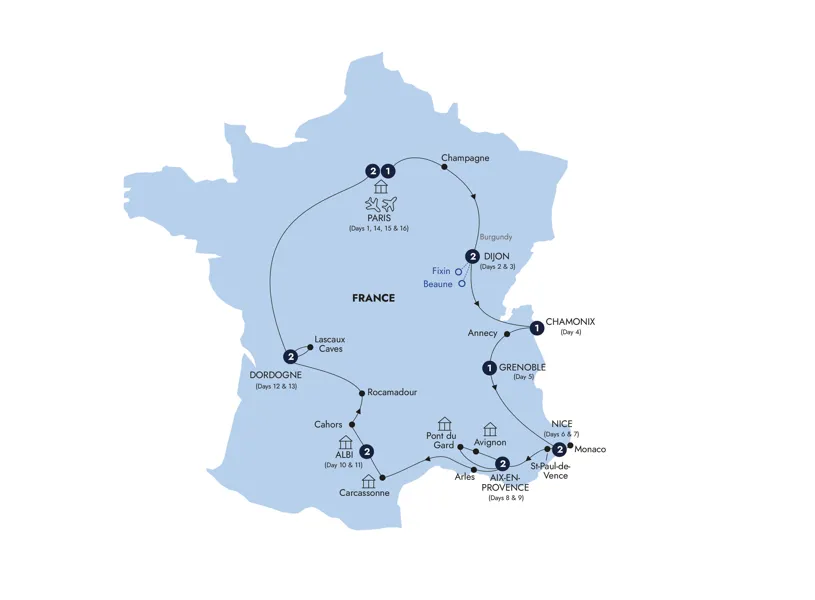
16 Day France Tour to Paris, Dijon & Monaco
From
$6,950
$6,255

15 Days Cruise from Bordeaux to Paris
Uniworld River Cruises
From
$7,499
$6,374


All About Macarons
Few French sweets are as instantly recognizable as the macaron. These small, colorful pastries are made with two delicate almond-meringue shells surrounding a creamy filling, such as ganache, buttercream, or fruit preserves. Crisp on the outside and soft and slightly chewy inside, macarons are a favorite treat to try while visiting France.
Macarons come in an enormous variety of flavors. You'll find classics such as chocolate, vanilla, pistachio, raspberry, lemon, coffee, and salted caramel alongside more unexpected varieties featuring rose, lavender, passion fruit, coconut, praline, or seasonal ingredients. Some pâtisseries and macaron shops also create their own signature flavors, so it's worth trying something you haven't seen before.
How to Choose Macarons in France
Macarons are typically displayed individually in a glass case, making it easy to choose your own assortment. You can order just one or two to enjoy while sightseeing or select several flavors to create a small box. Larger decorative boxes are also popular gifts and souvenirs, although macarons are delicate and generally best enjoyed fresh.
If you're unsure which flavors to choose, ask the person behind the counter for a recommendation. Starting with a few traditional flavors and adding one or two unusual choices is an easy way to sample a range without committing to a large box.
How to Order Macarons in French
You don't need to speak fluent French to order macarons. A few simple phrases will help you choose your flavors and quantities:
| French | English |
|---|---|
| Je voudrais un macaron, s'il vous plaît. | I would like one macaron, please. |
| Je voudrais six macarons, s'il vous plaît. | I would like six macarons, please. |
| Je voudrais une boîte de macarons. | I would like a box of macarons. |
| Quels parfums avez-vous ? | What flavors do you have? |
| Quel parfum recommandez-vous ? | Which flavor do you recommend? |
| Un de chaque, s'il vous plaît. | One of each, please. |
| Je voudrais celui-ci. | I would like this one. |
| Je voudrais deux pistache et deux chocolat. | I would like two pistachio and two chocolate. |
| C'est quoi comme parfum ? | What flavor is this? |
When ordering, parfum is the word you'll commonly see and hear for "flavor." Don't worry if you can't pronounce the name of every macaron in the display. Pointing and saying "celui-ci, s'il vous plaît" ("this one, please") works perfectly well.
Popular Macaron Flavors to Look For
Some flavors you're likely to encounter include chocolat (chocolate), vanille (vanilla), pistache (pistachio), framboise (raspberry), citron (lemon), café (coffee), caramel au beurre salé (salted butter caramel), praliné (praline), noix de coco (coconut), and rose (rose).
Don't feel like you have to stick entirely to familiar flavors. Part of the fun of visiting a French pâtisserie is seeing what that particular shop does differently. Seasonal fruit, floral flavors, spices, chocolate combinations, and creations unique to the pastry chef can make some of the less familiar macarons the most interesting ones to try.
Macaron or Macaroon?
Despite their similar names, a French macaron and a macaroon are different sweets. A macaron is the colorful almond-meringue sandwich cookie you'll see in pâtisserie windows throughout France. A macaroon is typically a denser coconut-based cookie. If you're looking for the classic French pastry, macaron is the word you want.
Good to Know When Ordering
Overall, it’s important to practice gracious manners, enjoy yourself, and try to learn a little of the French tradition of baking as you visit various boulangeries and patisseries across France. Never be afraid to try new things There are a ton of bread and pastries you may never have seen before, any one of which could become your new favorite! Remember the basics so you can show your gratitude in French for all the baked goods you’re going to enjoy.
You Might Also Like


 Free Brochure
Order Your Free Brochure
Sign up to order your FREE travel brochure subscription and get exclusive offers only available to our subscribers
 Download Brochure
 View Brochure Online
 Shop Deals