




Dreaming of sipping wine in France? Browse our selection of Guided Vacations and River Cruises.
How to Order Wine in French
Essential Phrases and Wine Tips for France

Ordering wine in France doesn't require extensive knowledge of French wine or perfect pronunciation. A few simple phrases can help you order a glass or bottle, ask your server for a recommendation, and understand some of the terms you'll see on a French wine list.
And there's good reason to try something new. Wine is closely connected to the regions of France, from Champagne and Burgundy to Bordeaux, Provence, Alsace, and the Loire Valley. What you find on the wine list often reflects where you are and what you're eating.
Whether you're sitting at a Paris café, having dinner in Bordeaux, or enjoying a meal in Provence, use this guide to order wine in French with confidence.
How Do You Order Wine in French?
You don't need a complicated sentence. Start with one of these useful phrases:
Je voudrais un verre de vin rouge, s'il vous plaît.
I would like a glass of red wine, please.
Pronunciation: zhuh voo-dray un vehr duh van roozh, seel voo pleh
Je voudrais un verre de vin blanc, s'il vous plaît.
I would like a glass of white wine, please.
Pronunciation: zhuh voo-dray un vehr duh van blahn, seel voo pleh
Je voudrais une bouteille de vin, s'il vous plaît.
I would like a bottle of wine, please.
Pronunciation: zhuh voo-dray oon boo-tay duh van, seel voo pleh
You can also simply say what you'd like followed by s'il vous plaît (please). For example:
Un verre de rosé, s'il vous plaît.
A glass of rosé, please.
Essential French Wine Vocabulary
These are some of the most useful words to recognize when ordering wine at a restaurant, café, or wine bar in France.
| French | English | Pronunciation |
|---|---|---|
| Vin | Wine | van |
| Vin rouge | Red wine | van roozh |
| Vin blanc | White wine | van blahn |
| Vin rosé | Rosé wine | van ro-zay |
| Vin pétillant | Sparkling wine | van pay-tee-yahn |
| Champagne | Champagne | shahm-pahn-yuh |
| Un verre | A glass | un vehr |
| Une bouteille | A bottle | oon boo-tay |
| Un pichet | A pitcher/carafe | un pee-shay |
| La carte des vins | The wine list | lah kart day van |
| Vin de la maison | House wine | van duh lah may-zohn |
| Sec | Dry | sehk |
| Doux | Sweet | doo |
| Brut | Dry, commonly used for sparkling wine | broot |
| S'il vous plaît | Please | seel voo pleh |
| Merci | Thank you | mehr-see |
Understanding a French Wine List
To ask for the wine list, say:
La carte des vins, s'il vous plaît.
The wine list, please.
Once you have it, you may notice that a French wine list looks a little different from what you're accustomed to in the United States.
French wines are often identified by where they were produced rather than simply by grape variety. Instead of looking for Pinot Noir, Chardonnay, or Sauvignon Blanc, you may encounter names such as Bourgogne, Chablis, Sancerre, Bordeaux, or Champagne.
That's because French wine is strongly associated with place. And just like traditional French food, what you drink can change significantly from one region of France to another.
What Do AOC and AOP Mean on French Wine?
You may see the terms AOC (Appellation d'Origine Contrôlée) or AOP (Appellation d'Origine Protégée) on French wine labels and menus. These designations indicate that a wine comes from a defined geographical area and follows established rules for how it is produced.
The system helps protect the connection between a wine and its place of origin. Depending on the appellation, regulations can cover which grape varieties may be used, where the grapes are grown, and how the wine is made.
You don't need to memorize France's wine classifications before your trip. The most useful thing to know is that place matters. A name such as Champagne, Chablis, or Bordeaux doesn't just tell you where a wine comes from. It can also give you clues about the grapes, style, and traditions behind it.
Want to go deeper? Read our guide to the wine regions of France for a closer look at French wine, including Bordeaux and Burgundy.
What Wine Should You Order in France?
If you recognize something you like on the wine list, ordering can be straightforward. But you don't need to recognize every region, appellation, or bottle to find a wine you'll enjoy.
One of the easiest options is to ask your server for a recommendation:
Qu'est-ce que vous recommandez ?
What do you recommend?
If you're ordering a meal, you can ask:
Quel vin recommandez-vous avec ce plat ?
Which wine do you recommend with this dish?
Or:
Quel vin va bien avec ce plat ?
Which wine goes well with this dish?
You can also explain what kind of wine you usually enjoy:
Je préfère un vin rouge.
I prefer red wine.
Je préfère un vin blanc sec.
I prefer a dry white wine.
Je voudrais quelque chose de léger.
I would like something light.
These simple descriptions can be more useful than trying to navigate an unfamiliar wine list entirely on your own.
Try the Local Wine
One of the pleasures of traveling through France is seeing how both the food and wine change along the way. Instead of ordering the same familiar wine everywhere you go, consider trying something produced in the region you're visiting.
Ask:
Quel vin de la région recommandez-vous ?
Which local wine do you recommend?
In Burgundy, that might mean trying a local Pinot Noir or Chardonnay. In Provence, you might order a dry rosé. In Alsace, you may find yourself choosing between Riesling and Gewürztraminer.
Trying the wine alongside food from the same region can be one of the most enjoyable ways to experience French cuisine.
What to Order & What to Pair by Region
From Bordeaux reds to Provence rosés, wine varies considerably across France. Use this guide to see what each region is known for, the grapes you may encounter, and what foods pair well with its wines.
| Wine Region | Known For | Common Grapes | Pairs Well With |
|---|---|---|---|
| Bordeaux | Red blends | Cabernet Sauvignon, Merlot | Beef, lamb, duck, rich meat dishes |
| Burgundy (Bourgogne) | Red and white wines, including Chablis | Pinot Noir, Chardonnay | Chicken, beef, mushrooms, cheese, rich sauces |
| Champagne | Sparkling wine | Chardonnay, Pinot Noir, Meunier | Seafood, cheese, appetizers, celebrations |
| Provence | Pale, dry rosé | Grenache, Cinsault, Syrah | Seafood, salads, Provençal vegetables, Mediterranean dishes |
| Loire Valley | Diverse whites and reds | Sauvignon Blanc, Chenin Blanc, Cabernet Franc | Goat cheese, seafood, poultry, lighter dishes |
| Alsace | Aromatic white wines | Riesling, Gewürztraminer, Pinot Gris | Pork, poultry, sausage, richer or spicier dishes |
How to Order Wine by the Glass, Bottle, or Carafe
Once you've decided what you'd like to drink, you'll need to decide how much to order. Depending on the restaurant and wine, you may have several options.
Ordering Wine by the Glass
Ask for:
Un verre de vin rouge, s'il vous plaît.
A glass of red wine, please.
Simply substitute blanc for white or rosé for rosé.
You may also see vin au verre, meaning wine by the glass, on the menu.
Ordering a Bottle
Ask for:
Une bouteille de vin, s'il vous plaît.
A bottle of wine, please.
If you've already chosen a bottle from the wine list, you can point to it and say:
Cette bouteille, s'il vous plaît.
This bottle, please.
Ordering a Carafe or Pichet
Casual restaurants, cafés, and bistros may offer wine in a pichet, or small pitcher, sometimes in quantities such as a quarter-liter or half-liter.
Useful terms include:
Un quart – A quarter-liter
Un demi – A half-liter
Un pichet de vin rouge – A pitcher of red wine
Un pichet de vin blanc – A pitcher of white wine
A pichet can be a convenient choice when you want more than a glass but don't want to order an entire bottle.
French Wine Etiquette: What Travelers Should Know
French wine etiquette doesn't need to feel intimidating.
If you order a bottle, your server may present it to you before opening it. Check the label to make sure it's the wine and vintage you ordered.
The person who ordered the bottle may then receive a small amount to taste. This isn't generally an invitation to decide whether you like the wine. The purpose is to check that the wine doesn't have a fault before it's served to the table.
You also don't need to pretend to be a wine expert. Asking your server for a recommendation, describing what you typically enjoy, or asking what pairs well with your meal is perfectly appropriate.
And don't assume the most expensive bottle is necessarily the best choice for your meal. A regional recommendation can introduce you to a wine you might never have considered ordering at home.
Do You Tip for Wine Service in France?
Tipping works differently in France than it does in the United States. Tips are optional, and where a restaurant or bar charges for service, that service is included in the displayed price.
You can still leave a little extra when you've received particularly good service, but you don't need to automatically calculate a percentage of your wine or restaurant bill as you typically would in the United States.


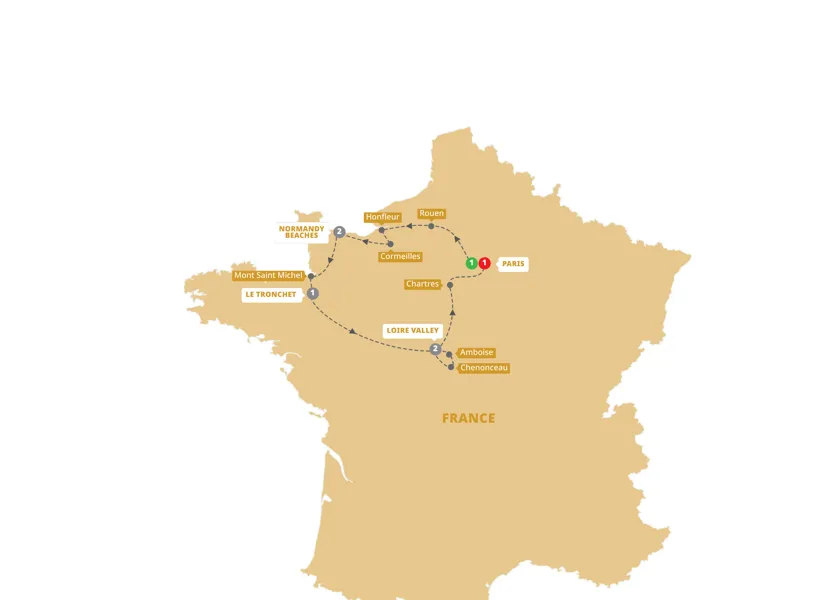
8 Day France Tour of D-Day Beaches
From
$2,495
$2,246

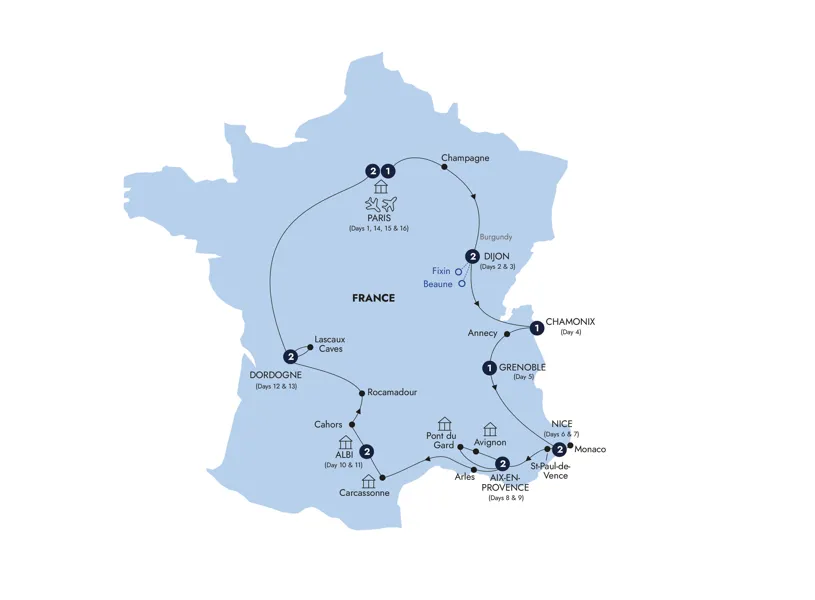
16 Day France Tour to Paris, Dijon & Monaco
From
$7,150
$6,435

15 Days Cruise from Bordeaux to Paris
Uniworld River Cruises
From
$7,499
$6,374


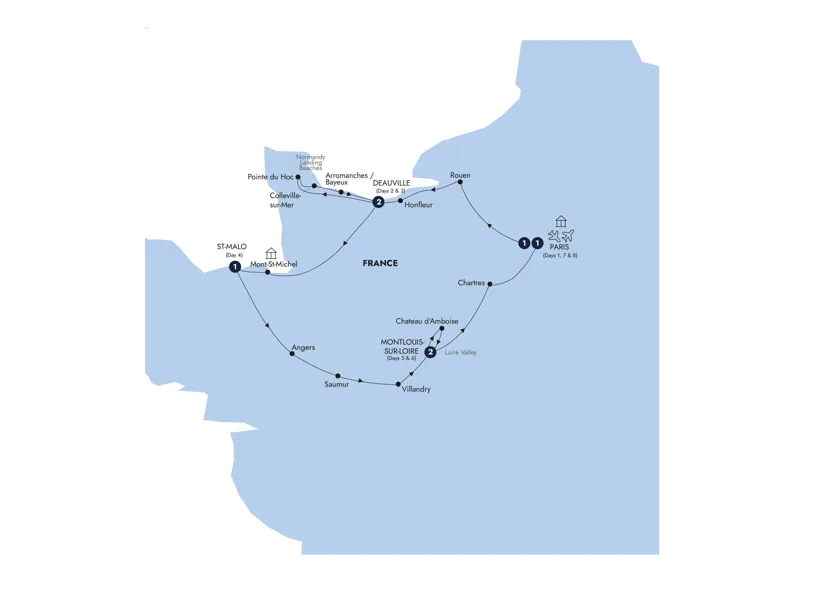
8 Day France Tour to Paris & the Loire Valley
From
$3,525
$3,173
Experience French Wine on a Trip to France
Learning a few French wine phrases is useful, but the best part is getting the chance to use them.
Traveling through France gives you opportunities to experience wine in the places where it has been produced for generations, while also enjoying the foods, cities, villages, and landscapes that make each region distinct. Guided tours of France make it easier to experience several parts of France in one vacation without worrying about navigating between destinations, arranging transportation, or planning every detail yourself.
Depending on your itinerary, you may also enjoy regional meals, wine tastings, vineyard visits, and other culinary experiences along the way. And when you have free time to choose a café or restaurant yourself, you'll be ready to order a famous traditional dish and ask for the wine list and order a glass in French to pair with a traditional dish.
Frequently Asked Questions About Ordering Wine in France


Say "Un verre de vin, s'il vous plaît," meaning "A glass of wine, please."
Add rouge for red, blanc for white, or rosé for rosé like this:
"Un verre de vin rouge, s'il vous plaît." A glass of red wine, please.
"Un verre de vin blanc, s'il vous plaît." A glass of white wine, please.
"Un verre de vin rosé, s'il vous plaît." A glass of rosé, please.
Say "La carte des vins, s'il vous plaît." This means "The wine list, please."
Say "Qu'est-ce que vous recommandez?" for "What do you recommend?" To ask specifically about pairing wine with your meal, say "Quel vin recommandez-vous avec ce plat?"
Vin de la maison means "house wine." Depending on the restaurant, house wine may be available by the glass, carafe, or bottle.
Yes. Many restaurants, cafés, and wine bars offer wine by the glass. Look for vin au verre or ask for un verre de vin.
Sec means dry. For example, un vin blanc sec is a dry white wine.
AOC and AOP are geographical designations that indicate where a wine comes from and that it follows established production requirements associated with that appellation.
French wine is closely associated with its place of origin, so wines are often identified by region or appellation rather than primarily by grape variety. Knowing the region can give you clues about the grapes and style of wine you're ordering.
Champagne is a sparkling wine produced within the protected Champagne appellation and according to its established production requirements. Other sparkling wines produced outside Champagne cannot use the Champagne appellation. Learn more about the history and tradition of making Champagne wine in this article.
It's worth considering. Wine styles vary considerably across France, and ordering something produced in the region you're visiting can introduce you to local grapes and traditions while complementing regional cuisine.
Tipping is optional in France. Where service is charged by a restaurant or bar, it is included in the displayed price rather than added as an obligatory tip afterward.
No. Many hospitality workers in popular tourist destinations speak some English, but knowing simple phrases such as bonjour, s'il vous plaît, merci, and un verre de vin can make ordering easier.
Interested in French Wine & Cuisine? You Might Also Like...


 Free Brochure
Order Your Free Brochure
Sign up to order your FREE travel brochure subscription and get exclusive offers only available to our subscribers
 Download Brochure
 View Brochure Online
 Shop Deals