




France is a must-visit destination for its rich history, stunning architecture, world-class art museums, diverse landscapes, and of course, its exquisite food and wine.
Traditional French Food:
15 Must-Try Dishes in France
15 Must-Try Dishes in France

What food should you try in France? Start with classics like bœuf bourguignon, coq au vin, escargots, French onion soup, quiche Lorraine, ratatouille, bouillabaisse, cassoulet, crêpes, and croissants. Just as important, try them where they belong. French cuisine is highly regional, and some of the country's most famous dishes are closely connected to Burgundy, Provence, Brittany, Lorraine, Normandy, and other parts of France.
One of the pleasures of traveling through France is seeing how dramatically the food changes along the way. Burgundy is known for dishes enriched with its celebrated wines, Marseille for Mediterranean seafood, Brittany for crêpes and buckwheat galettes, Lorraine for quiche, and Normandy for butter, cream, apples, and cheese.
If you're wondering what to eat on a trip to France, these 15 traditional French foods are a delicious place to start.

1. Bœuf Bourguignon
Bœuf bourguignon, or beef Burgundy, is a traditional French beef stew from Burgundy made with beef slowly cooked in red wine with vegetables, herbs, mushrooms, onions, and often bacon. It is one of the best-known examples of Burgundy's wine-centered cuisine.
The long cooking time gives the beef its tenderness and creates the rich sauce that defines the dish. Depending on where you order it, bœuf bourguignon may be served with potatoes, noodles, or another simple accompaniment designed to soak up the sauce.
Where to Try Bœuf Bourguignon in France
Look for bœuf bourguignon while traveling through Burgundy, particularly around Dijon and Beaune. Burgundy's cuisine frequently incorporates the region's wines, making the dish especially connected to its place of origin.
What Does Bœuf Bourguignon Taste Like?
Expect tender beef and a deeply savory sauce with the earthy flavors of mushrooms, herbs, and vegetables and the richness of red wine. Despite its reputation as a French culinary classic, bœuf bourguignon is fundamentally comforting, slow-cooked food.
2. Coq au Vin
Coq au vin is a traditional French dish of chicken slowly braised in wine, typically with mushrooms, onions, garlic, and herbs. Variations exist throughout France, with the wine used in the dish often reflecting the region where it is prepared.
Like bœuf bourguignon, coq au vin demonstrates one of the defining techniques of traditional French cooking: taking relatively straightforward ingredients and developing deeper flavor through patient preparation.
Where to Try Coq au Vin in France
Coq au vin is served throughout France, but it is especially associated with Burgundy, where red Burgundy wine is traditionally used in the preparation.
What Does Coq au Vin Taste Like?
Coq au vin is rich and savory, with tender chicken and a wine-based sauce flavored by aromatic vegetables and herbs. It is the kind of classic dish you are likely to find in traditional restaurants and bistros.
3. Escargots de Bourgogne
Escargots de Bourgogne are Burgundy-style snails traditionally served in their shells with garlic, parsley, and butter. They are one of France's most recognizable appetizers and an especially famous specialty of Burgundy.
For travelers trying escargots for the first time, the preparation is often more familiar than expected. Much of the flavor comes from the warm garlic-herb butter surrounding the snails.
Where to Try Escargots in France
Burgundy is the natural place to seek out escargots de Bourgogne, although you'll also see escargots on traditional French menus elsewhere in the country.
What Do Escargots Taste Like?
Escargots themselves have a mild, earthy flavor and a tender, slightly chewy texture. Garlic, parsley, and plenty of butter provide the strongest flavors in the classic Burgundy preparation.
4. Soupe à l'Oignon, French Onion Soup
French onion soup, or soupe à l'oignon, is made with slowly cooked onions and a rich broth, then traditionally topped with bread and melted or browned cheese.
It is one of the dishes travelers most readily associate with a classic French bistro. The onions are cooked until deeply softened and sweet, creating a soup that balances savory and subtly sweet flavors beneath its cheesy topping.
Where to Try French Onion Soup in France
French onion soup is widely available, but it feels especially at home in a traditional Parisian bistro or brasserie. It makes a warming lunch or starter, particularly during the cooler months.
What Does French Onion Soup Taste Like?
Expect a deeply savory broth with the sweetness of slowly cooked onions, followed by the richness of toasted bread and melted cheese.

5. Quiche Lorraine
Quiche Lorraine is a savory tart from Lorraine traditionally made with pastry, eggs, cream, and smoked pork or bacon. The traditional Lorraine version is notably simple, allowing the creamy filling and smoky pork to provide most of the flavor.
Although quiche now comes in countless variations around the world, trying the original in France is an opportunity to experience the dish closer to its regional roots.
Where to Try Quiche Lorraine in France
As its name suggests, Lorraine in northeastern France is the home of quiche Lorraine. Traditional versions may be served warm alongside a simple green salad.
What Does Quiche Lorraine Taste Like?
Quiche Lorraine has a buttery pastry crust with a soft, savory custard filling and smoky, salty notes from the pork.
6. Ratatouille
Ratatouille is a traditional vegetable dish from Provence made with Mediterranean vegetables such as tomatoes, eggplant, zucchini, peppers, and onions. It is one of the most recognizable examples of Provençal cooking and reflects southern France's abundance of fresh produce and olive oil.
Ratatouille can be served as a main dish or alongside meat or fish. Recipes and preparation methods vary, but vegetables remain the star.
Where to Try Ratatouille in France
Try ratatouille in Provence or along the French Riviera, where the vegetables, herbs, and olive oil associated with Mediterranean cooking are central to regional cuisine.
What Does Ratatouille Taste Like?
Expect tender vegetables with bright tomato flavor, olive oil, garlic, and aromatic herbs. Compared with some of France's richer classics, ratatouille is fresh, colorful, and vegetable-forward.
7. Bouillabaisse
Bouillabaisse is a traditional fish dish from Marseille made with Mediterranean fish cooked in a flavorful broth and typically served with rouille and bread or croutons. It is one of the signature dishes of Marseille and Provençal cuisine.
What began as a practical way of preparing the day's catch has become one of France's most celebrated seafood dishes. Traditional preparations may serve the fish separately from the broth, making a proper bouillabaisse more of a meal than simply a bowl of fish soup.
Where to Try Bouillabaisse in France
Marseille is the place to try bouillabaisse. Its identity is deeply connected to the Mediterranean port and the rockfish found along the Provençal coast.
What Does Bouillabaisse Taste Like?
Bouillabaisse is intensely savory and seafood-forward, with a fragrant broth often seasoned with Provençal herbs and spices. Rouille, a garlicky accompaniment served with the dish, adds another layer of flavor.
8. Cassoulet
Cassoulet is a slow-cooked French casserole from southwestern France traditionally made with white beans and meats such as duck confit and sausage. It is hearty, rustic, and strongly associated with the culinary traditions of southwest France.
The exact ingredients vary from one place and cook to another, and those differences are part of the dish's identity. What remains consistent is its combination of beans, meat, and long, slow cooking.
Where to Try Cassoulet in France
Cassoulet is most closely associated with southwestern France, particularly the area around Castelnaudary, Carcassonne, and Toulouse.
What Does Cassoulet Taste Like?
Cassoulet is rich, savory, and substantial. The beans absorb flavor from the meats as they cook, creating a deeply comforting dish best suited to a leisurely meal.

9. Croque-Monsieur
A croque-monsieur is a classic French hot sandwich made with ham and cheese, usually toasted or baked until crisp and melted. Many versions are topped with béchamel sauce and additional cheese before being browned.
It is considerably simpler than France's elaborate culinary reputation might suggest, which is exactly why it belongs on this list. French food is as much about cafés, bakeries, neighborhood restaurants, and everyday meals as it is about formal dining.
Where to Try a Croque-Monsieur in France
The croque-monsieur is widely available in cafés and brasseries throughout France, making it an easy choice for lunch while sightseeing.
What Is the Difference Between a Croque-Monsieur and Croque-Madame?
A croque-madame is essentially a croque-monsieur topped with an egg. Both usually feature ham and cheese, but the fried or poached egg distinguishes the croque-madame.
10. Steak Frites
Steak frites is a classic French bistro dish consisting of steak served with French fries. Simple as that combination sounds, it remains a fixture of brasseries and bistros and is one of the easiest traditional meals for first-time visitors to order.
The preparation varies considerably. Different cuts of steak, sauces, and styles of fries can change the experience from one restaurant to the next.
Where to Try Steak Frites in France
You'll find steak frites across the country, but ordering it at a Parisian bistro or brasserie is a quintessential French dining experience.
What Is Usually Served With Steak Frites?
Depending on the restaurant, the steak may be accompanied by peppercorn sauce, béarnaise, herb butter, or simply its own pan juices, with crisp fries served alongside.

11. Crêpes and Breton Galettes
Crêpes are thin French pancakes that can be served with sweet fillings, while Breton galettes are savory pancakes traditionally made with buckwheat flour. Both are particularly associated with Brittany.
A sweet crêpe might arrive with sugar, chocolate, fruit, caramel, or another simple filling. A traditional savory galette can contain cheese, ham, egg, or other ingredients.
Where to Try Crêpes in France
For the strongest regional connection, try both crêpes and galettes in Brittany. You'll also find crêperies throughout Paris and other French cities.
What Is the Difference Between a Crêpe and a Galette?
In Brittany, crêpes are generally sweet and made with wheat flour, while savory galettes are traditionally made with buckwheat flour. The galette's buckwheat gives it a darker color and more earthy, savory flavor.
12. Croissants
A French croissant is a flaky, crescent-shaped pastry made from laminated dough layered with butter. The repeated folding of dough and butter creates the crisp exterior and airy layers that distinguish a well-made croissant.
For travelers, a fresh croissant from a neighborhood boulangerie is one of the simplest pleasures of a morning in France. You do not need an elaborate breakfast. A croissant and coffee can be enough.
Where to Try Croissants in France
Croissants are available at boulangeries and pâtisseries throughout France. Paris offers seemingly endless opportunities, but a good neighborhood bakery anywhere in the country can provide the experience you're looking for.
What Makes a Good French Croissant?
Look for a deeply golden exterior, crisp and delicate outer layers, a light honeycomb-like interior, and a noticeable buttery aroma. A good croissant should feel airy rather than dense or doughy.
Read this article to learn all about ordering like a local at a French bakery.
13. French Cheese
France is famous for hundreds of varieties and styles of cheese, including Brie, Camembert, Comté, Roquefort, and chèvre. Cheese traditions vary significantly by region, reflecting differences in local milk, landscapes, climate, and production methods.
Normandy, for example, is particularly associated with rich dairy products and cheeses including Camembert, Pont-l'Évêque, Livarot, and Neufchâtel.
What French Cheeses Should First-Time Visitors Try?
A good introduction might include Brie or Camembert for soft cheese, Comté for a firmer cheese, chèvre for goat cheese, and Roquefort if you enjoy stronger blue cheeses. Check out this article to learn more about the best cheeses to try across Europe.

14. Crème Brûlée
Crème brûlée is a French dessert consisting of smooth custard topped with a thin layer of hardened caramelized sugar. The contrast between the cool, creamy custard and crisp sugar topping is what makes the dessert so distinctive.
Cracking through the caramelized surface with your spoon is part of the experience, revealing the soft custard underneath.
Where to Try Crème Brûlée in France
Crème brûlée appears on dessert menus throughout France and is particularly easy to find in traditional bistros and brasseries.
What Does Crème Brûlée Taste Like?
Classic crème brûlée is creamy and vanilla-forward, with a bittersweet caramel note from the torched sugar topping.
Want to learn more about European desserts? Read our article about the top desserts to try when traveling across Europe.
15. Tarte Tatin
Tarte Tatin is a traditional French upside-down apple tart made by caramelizing apples with butter and sugar before baking them beneath a pastry crust. It is associated with Lamotte-Beuvron in the Loire Valley and the Tatin sisters, although the exact story behind its creation is not completely certain.
Once baked, the tart is inverted so the caramelized apples sit on top. The result combines soft fruit, dark caramel, and crisp pastry.
Where to Try Tarte Tatin in France
The dessert originated in the Loire Valley, but tarte Tatin is now a classic found throughout France.
What Is Tarte Tatin Served With?
Tarte Tatin may be served on its own or accompanied by crème fraîche or another creamy accompaniment that balances the warm caramelized apples.
Traditional French Food by Region
One of the best ways to understand French cuisine is by looking at where dishes come from. France's regional cooking reflects local agriculture, climate, history, and long-standing culinary traditions.
| Region | Traditional Foods to Try |
|---|---|
| Paris & Île-de-France | French onion soup, croque-monsieur, steak frites, croissants |
| Burgundy | Bœuf bourguignon, coq au vin, escargots de Bourgogne |
| Provence & Marseille | Bouillabaisse, ratatouille |
| Brittany | Crêpes, buckwheat galettes |
| Lorraine | Quiche Lorraine |
| Southwest France | Cassoulet, duck confit |
| Normandy | Camembert and other regional cheeses |
| Loire Valley | Tarte Tatin, goat cheeses |
That regional connection is important when deciding what to eat in France. You can order many of these dishes throughout the country, but tasting a specialty in the place that shaped it gives the meal more context.
A plate of bœuf bourguignon in Burgundy, a galette in Brittany, or bouillabaisse in Marseille isn't simply another meal. It is a chance to experience the ingredients and traditions that have helped define that part of France.


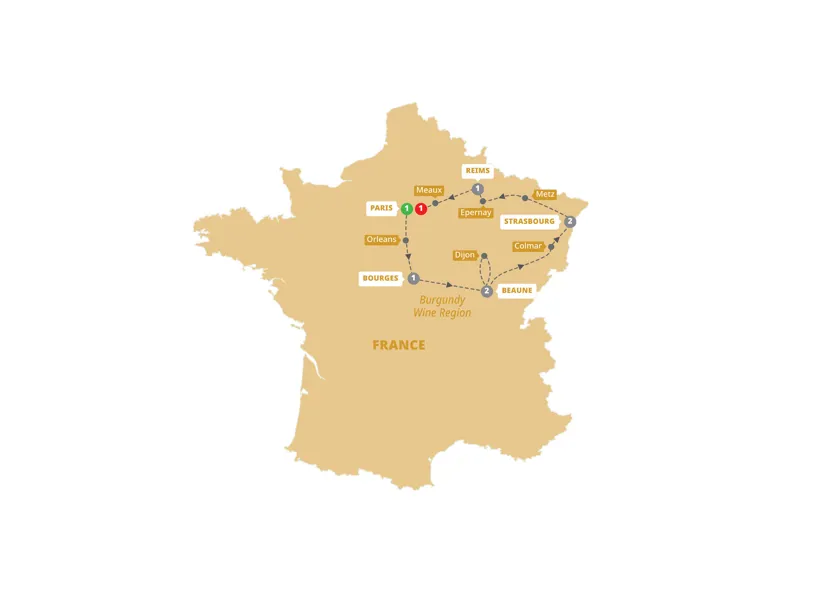

8 Day France Tour of D-Day Beaches
From
$2,495
$2,246
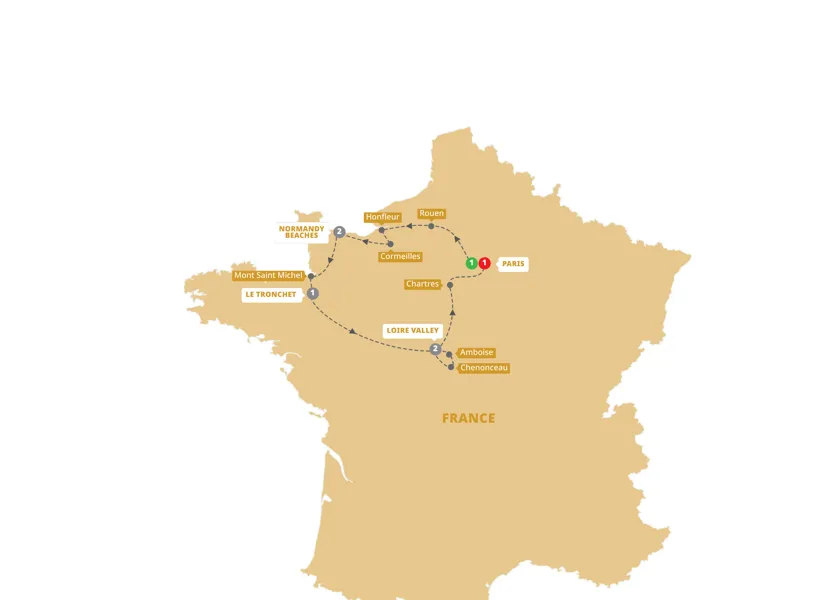

16 Day France Tour to Paris, Dijon & Monaco
From
$6,950
$6,255


15 Days Cruise from Bordeaux to Paris
Uniworld River Cruises
From
$7,499
$6,374


18 Day Cruise from Bordeaux to Lisbon
Uniworld River Cruises
From
$9,399
$8,929

Taste Your Way Through France on a Guided Tour
Trying traditional French food is even better when the dishes are part of the places you came to see. On a guided tour of France, you can experience several of the country's famous cities and regions in one vacation, giving you more opportunities to taste the specialties connected to each destination.
Going guided also makes exploring France's food scene easier. You won't have to worry about navigating between cities, figuring out transportation, or spending your vacation researching where to eat. Depending on your itinerary, you may browse markets and bakeries with local experts, enjoy included meals at carefully selected restaurants, and dine at family-run establishments you might never have found on your own.
And when a memorable restaurant is already part of your itinerary, there's no searching through reviews or trying to make reservations in another language. The details are taken care of, leaving you more time to enjoy the experience, whether that's starting the morning with a warm croissant, sitting down to a traditional meal in Burgundy, or trying a regional specialty somewhere new.
Explore our guided tours of France to find an itinerary that takes you to the cities, regions, landmarks, and flavors you've been dreaming of experiencing.
Frequently Asked Questions About Traditional French Food


Some of the best-known traditional French dishes are bœuf bourguignon, coq au vin, French onion soup, escargots, quiche Lorraine, ratatouille, bouillabaisse, cassoulet, crêpes, and steak frites. France is also famous for its cheeses, breads, pastries, and desserts. Many of these foods have strong regional connections, so what is considered traditional varies depending on where you travel in France.
For a first trip, try a mix of everyday favorites and regional specialties. Start with a fresh croissant, baguette, French cheese, crêpe or galette, French onion soup, and a classic bistro meal such as steak frites. Then look for specialties from the region you're visiting, such as bœuf bourguignon in Burgundy or bouillabaisse in Marseille.
There is no single national dish that represents all of French cuisine. Croissants, baguettes, cheese, crêpes, bœuf bourguignon, coq au vin, escargots, and French onion soup are among the foods most strongly associated with France internationally. Within France, however, cuisine is highly regional.
A traditional French breakfast is usually fairly simple. It may include bread or a croissant with butter or jam, accompanied by coffee, tea, or hot chocolate. Large cooked breakfasts are less representative of the traditional everyday French breakfast.
A traditional French meal may include several courses, beginning with a starter, followed by a main course, then cheese and/or dessert. The exact structure depends on the setting and occasion. France's gastronomic tradition places particular importance on sharing a meal, pairing food and drink, and enjoying courses in sequence.
Paris is associated with croissants, baguettes, French onion soup, croque-monsieur, steak frites, macarons, and classic French pastries. Because Paris draws culinary traditions from across France, it is also one of the easiest places to sample dishes originating in other French regions.
Southern France, particularly Provence and the Mediterranean coast, is known for olive oil, vegetables, herbs, seafood, ratatouille, bouillabaisse, salade niçoise, tapenade, and other Mediterranean-inspired dishes. Marseille is especially famous for bouillabaisse.
Burgundy is particularly famous for bœuf bourguignon, escargots de Bourgogne, Dijon mustard, and dishes prepared with Burgundy wine. The region's food and wine traditions are closely connected, and red wine is an important ingredient in several of its classic recipes.
Normandy is known for butter, cream, apples, cider, seafood, and cheeses such as Camembert, Pont-l'Évêque, Livarot, and Neufchâtel. Its lush dairy country and apple orchards have strongly influenced the region's traditional cuisine.
In Brittany, a crêpe generally refers to the sweet wheat-flour version, while a galette is a savory pancake traditionally made with buckwheat flour. Galettes are commonly filled with ingredients such as ham, cheese, and egg, while crêpes may be served with sugar, chocolate, fruit, or caramel.
Interested in French Food? You Might Also Like...


 Free Brochure
Order Your Free Brochure
Sign up to order your FREE travel brochure subscription and get exclusive offers only available to our subscribers
 Download Brochure
 View Brochure Online
 Shop Deals