




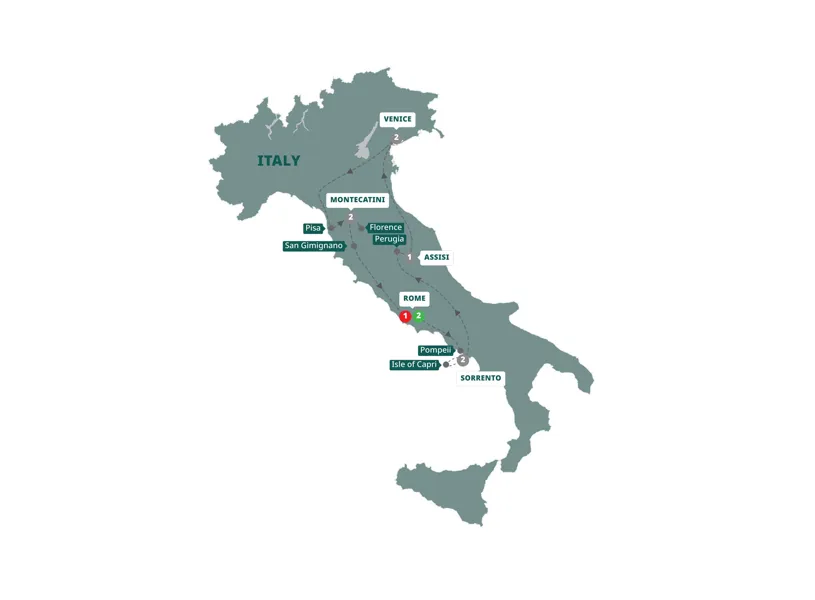
From the ancient ruins of Rome and Pompeii to the artistry of Florence and the famous canals of Venice, get ready to experience la dolce vita!
Medici Family Florence History
and Renaissance Influence
and Renaissance Influence
The Rise of the House of Medici in the 15th Century

Who Were the Medici Family?
Origins of the Medici Dynasty in Tuscany
The Medici family began as a modest but ambitious lineage in the Mugello region of Tuscany, Italy. By the 13th century, they had established themselves in Florence, a city already known for commerce and intellectual life. Their early success came through banking, which allowed them to build both wealth and influence within the city’s patrician class.
Unlike traditional nobility, the Medici rose through financial acumen and strategic alliances. Their name, meaning “doctors,” reflects earlier origins, though their legacy is firmly rooted in commerce, politics, and cultural leadership. Over time, they became one of the most powerful families in Europe, shaping the identity of Florence.
How the Medici Gained Political Power
The Medici rise to political dominance began in the 15th century under Cosimo de’ Medici, known as 'Cosimo the Elder'. Through careful diplomacy and financial influence, he secured control of Florence without holding an official title. His authority allowed the family to guide political decisions from behind the scenes. This subtle form of leadership became a defining feature of Medici rule. Rather than establishing a formal monarchy, they worked within Florence’s republican system while quietly directing it. This approach ensured lasting influence, allowing the family to maintain power for generations with only brief interruptions.
The Medici and the Rise of Renaissance Art
Patronage of Artists and Thinkers
The Medici are best known for their role as patrons of art in Italy. Their support fueled the work of artists such as Michelangelo, Leonardo da Vinci, and Botticelli. By funding creative minds, they helped transform Florence into the cultural heart of the Renaissance. This patronage was not only about prestige. It reflected a deep belief in human potential and intellectual growth. The Medici invested in libraries, academies, and philosophical discussions that shaped Renaissance thought.

Statue of Giovanni de’ Medici before the Basilica of San Lorenzo and the Medici Chapels, the family’s historic burial site
Architecture and Cultural Legacy in Florence
The architectural landscape of Florence still reflects Medici influence. Palaces, churches, and public spaces funded by the family remain central to the city’s identity. Structures such as the Medici Chapels and Palazzo Medici Riccardi demonstrate their commitment to beauty and innovation. In the heart of the city, Piazza della Signoria further reflects this legacy, where the Neptune Fountain, commissioned under Medici rule, stands as a symbol of power and control. Their contributions helped define Renaissance aesthetics. Balance, proportion, and harmony became guiding principles, influencing architecture across Europe for centuries.

Equestrian Statue of Cosimo I located in the Piazza della Signoria in Florence, Italy
Key Members of the Medici Family
Cosimo de’ Medici and Lorenzo the Magnificent
Cosimo de’ Medici laid the foundation for the family’s power, but his grandson Lorenzo de’ Medici, known as 'Lorenzo the Magnificent,' elevated it to new heights. Lorenzo was not only a political leader but also a patron of literature and philosophy. Under his leadership, Florence became a center of artistic brilliance. He fostered relationships with leading thinkers and artists, ensuring the city’s lasting cultural impact.
Medici Popes and European Influence
The Medici influence extended beyond Florence into the wider European stage. Several family members became popes, including Leo X and Clement VII. Their leadership shaped religious and political developments during a transformative period in European history. Through these roles, the Medici connected Florence to broader continental movements. Their reach extended into diplomacy, religion, and cultural exchange.

Piazza della Signoria and the Neptune Fountain, commissioned under Medici rule as a symbol of power and control
The Medici Family and Florence’s Golden Age
Florence as a Center of Learning and Culture
During Medici rule, Florence flourished as a hub of intellectual and artistic activity. Scholars, artists, and philosophers gathered in the city, contributing to a vibrant cultural environment. The Medici encouraged education and dialogue, which helped ideas spread across Europe. This period is often referred to as Florence’s golden age. The city became synonymous with innovation and creativity, setting standards that influenced generations.
Lasting Impact on European History
The Medici family’s influence did not end with their political power. Their contributions to art, education, and governance left a lasting imprint on European history. The Renaissance itself owes much to their vision and support. Even after their decline in the 18th century, their legacy continued through the works they inspired and the institutions they supported.
Medici Family Symbolism and Legacy Today
The Meaning Behind the Medici Coat of Arms
The Medici coat of arms, featuring distinctive red spheres on a gold shield, remains one of the most recognizable symbols in Florence. While interpretations vary, the emblem is closely associated with the family’s banking origins and influence. Today, this symbol appears throughout the city, linking modern Florence to its Renaissance past. It serves as a visual reminder of the family’s enduring presence.
How the Medici Shaped Modern Cultural Travel
The legacy of the Medici family continues to shape how people experience Florence today. Museums, galleries, and historic landmarks connected to the family offer insight into Renaissance life and thought.
Their story enriches cultural travel, providing context for the art and architecture that define Italy. Understanding the Medici allows visitors to see Florence not just as a destination, but as a living history. On a guided journey through Italy, this deeper perspective brings meaning to each palace, piazza, and masterpiece, revealing the Medici influence woven into the country’s cultural identity.











Frequently Asked Questions About the Medici Family


They played a central role in funding Renaissance art, supporting major artists, and shaping European cultural and political history.
The Medici were a powerful banking family from Florence who rose to political and cultural prominence during the Renaissance.
They originated in the Mugello region of Tuscany before establishing themselves in Florence.
They funded artists, supported education, and helped make Florence the center of Renaissance culture.
The main Medici line ended in the 18th century, though distant relatives may still exist.
Their coat of arms features red spheres on a gold background, often seen throughout Florence.
Interested in The Medici Family History & Italy? You Might Also Like...


 Free Brochure
Order Your Free Brochure
Sign up to order your FREE travel brochure subscription and get exclusive offers only available to our subscribers
 Download Brochure
 View Brochure Online
 Shop Deals