




Experience Switzerland’s Alpine landscapes, historic cities, and distinct cultural regions with the details taken care of. Our guided tours connect places like Lucerne, Zermatt, St. Moritz, Lake Geneva, and the Bernese Oberland with scenic rail journeys, regional food traditions, and experiences that bring Swiss culture to life.
Switzerland Travel Guide:
Places to Visit & Things to Do
Places to Visit & Things to Do

Switzerland brings together Alpine geography, historic cities, regional cuisines, and four national languages within a remarkably compact country. Travelers move from the German-speaking cities of Zürich, Lucerne, and Bern to French-speaking Geneva and Montreux, Italian-speaking Lugano, and the high valleys of Graubünden, where Romansh traditions remain part of Swiss cultural identity. The result is a destination shaped as much by regional differences as by its famous mountains and lakes.
For travelers interested in culture, scenery, and history, Switzerland offers far more than a single Alpine experience. The Matterhorn rises above Zermatt, vineyards descend toward Lake Geneva, medieval towns preserve centuries of architectural history, and scenic railways connect valleys, mountain passes, and resort towns across the Alps. These destinations and experiences reveal how geography has shaped Swiss communities, traditions, and daily life.

Best Places to Visit in Switzerland
The best places to visit in Switzerland reflect the country's geographic and cultural diversity. Alpine villages, medieval capitals, lakeside cities, vineyard regions, and high-mountain resorts each tell a different part of the Swiss story.
Lucerne
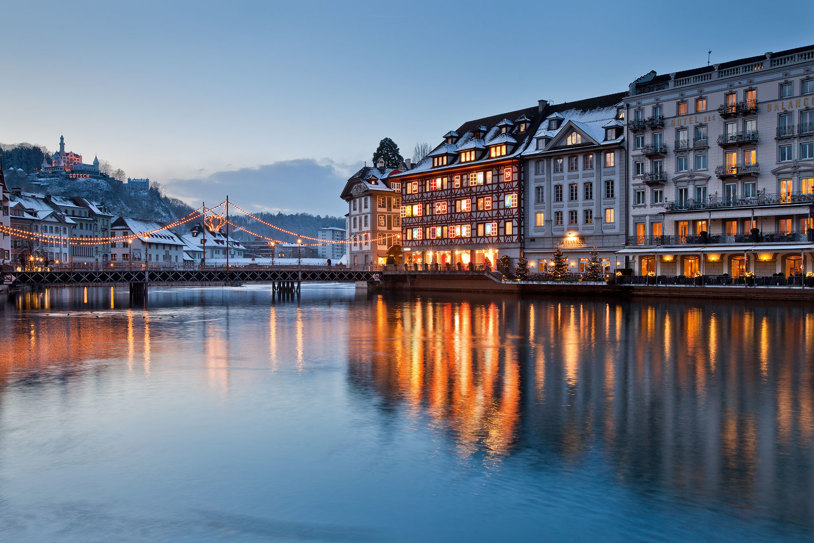
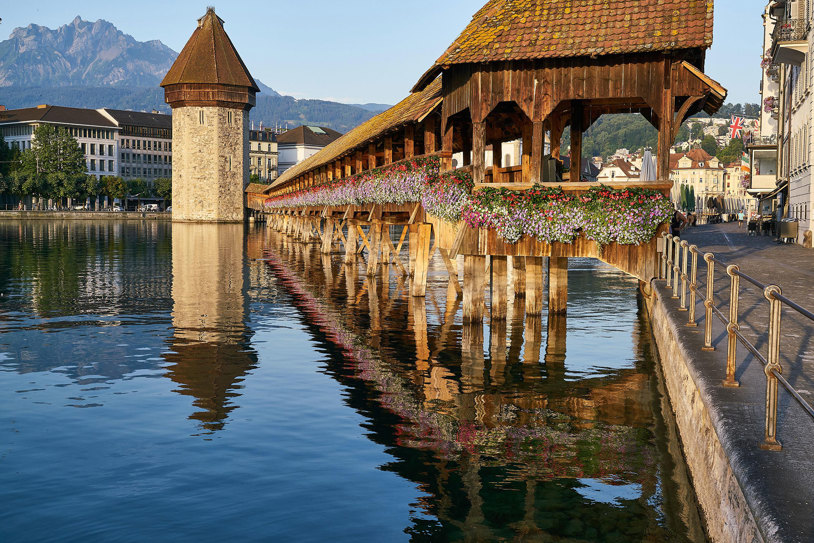
Lucerne sits on the shore of Lake Lucerne, surrounded by mountain landscapes that have made central Switzerland one of the country's most recognizable regions. The city's historic center includes the Chapel Bridge, Jesuit Church, and Lion Monument, while painted façades and medieval streets reveal Lucerne's long civic history.
Lucerne also connects naturally with the surrounding Alps. Mount Stanserhorn rises above the region and offers wide views across central Switzerland, while Lake Lucerne has historically linked communities around the water. This combination of city, lake, and mountain geography makes Lucerne an important introduction to central Switzerland.
Zermatt and the Matterhorn
Zermatt is a high-Alpine village in the canton of Valais, positioned beneath the Matterhorn near Switzerland's border with Italy. The Matterhorn's distinctive 4,478-meter summit has become one of the defining symbols of the Swiss Alps, but Zermatt itself also reflects the history of mountain communities shaped by tourism, agriculture, and Alpine geography.
The village is car-free and reached by mountain railway, preserving a compact center surrounded by peaks and traditional wooden architecture. Travelers may also experience higher mountain viewpoints around Zermatt, where the surrounding Pennine Alps extend across Switzerland and northern Italy.
St. Moritz and the Engadin Valley
St. Moritz lies in the Engadin Valley of Graubünden, a region shaped by high-altitude lakes, mountain passes, and centuries of travel across the eastern Alps. The resort became internationally known for winter tourism and hosted the Winter Olympic Games in 1928 and 1948, but the wider Engadin region also has deep cultural roots connected to Romansh language and Alpine traditions.
St. Moritz is closely associated with Switzerland's scenic rail network. Rail journeys through Graubünden cross mountain passes, valleys, and engineering landmarks, connecting the resort with other communities across the Alps. The combination of geography, transportation history, and resort culture gives St. Moritz a distinct identity within Switzerland.
Interlaken and the Bernese Oberland
Interlaken lies between Lake Thun and Lake Brienz in the Bernese Oberland, a region dominated by some of Switzerland's most recognizable peaks. The Eiger, Mönch, and Jungfrau rise above the surrounding valleys, creating one of the country's most dramatic Alpine landscapes.
Interlaken's geographic position makes it an important gateway to nearby mountain communities such as Grindelwald and Lauterbrunnen. Travelers moving through the Bernese Oberland experience a close relationship between lakes, glacial valleys, mountain railways, and settlements that developed along historic Alpine routes.
Grindelwald
Grindelwald sits beneath the north face of the Eiger in the Bernese Alps. The village developed within a landscape of glaciers, high peaks, and mountain pastures, creating strong connections between tourism, agriculture, and Alpine geography.
From Grindelwald, travelers can experience the wider Jungfrau region and mountain railways that lead toward Jungfraujoch. The area provides a clear example of how Switzerland's rail infrastructure opened high-Alpine landscapes to travelers while connecting remote mountain communities with larger towns.
Lauterbrunnen Valley
Lauterbrunnen occupies a narrow glacial valley bordered by steep rock walls and high Alpine peaks. The valley is known for its many waterfalls, including Staubbach Falls, which drops nearly 300 meters from the cliff above the village.
The landscape demonstrates the powerful role of glaciers and water in shaping the Bernese Alps. Villages, meadows, rivers, and waterfalls sit within a vertical landscape that connects the valley floor with high mountain plateaus, making Lauterbrunnen one of Switzerland's clearest examples of Alpine geography.

Bern
Bern, the capital of Switzerland, developed along a bend in the Aare River and retains one of the country's most important medieval urban centers. Its historic streets include the Cathedral of St. Vincent, Federal Palace, fountains, arcades, and the Zytglogge clock tower.
Bern's political role adds another dimension to the Swiss travel experience. While Alpine destinations emphasize geography and mountain culture, Bern introduces travelers to Switzerland's federal institutions, urban history, and German-speaking civic traditions.
Gruyères
Gruyères is a medieval town in the canton of Fribourg, surrounded by meadows and agricultural landscapes associated with one of Switzerland's best-known cheeses. A 13th-century castle overlooks the town, while the surrounding countryside reflects the region's long relationship with dairy farming.
The connection between place and cuisine is especially clear in Gruyères. The cheese that carries the town's name is inseparable from the agricultural landscape of western Switzerland, where cattle grazing, Alpine pastures, and traditional food production remain important parts of regional identity.
Montreux and Lake Geneva
Montreux sits along the eastern shore of Lake Geneva, where the lake narrows beneath the Alps and vineyard-covered slopes. The town developed as an important resort destination, attracting writers, artists, and travelers drawn to the lake, mountain scenery, and mild local climate.
The surrounding region connects Montreux with nearby Chillon Castle and the vineyards of Lavaux. Together, these places show how geography, agriculture, and cultural history meet along Lake Geneva, creating a landscape shaped by both natural beauty and centuries of settlement.
Geneva
Geneva occupies the western end of Lake Geneva near the French border. The city's location helped shape its long history as a center of trade, diplomacy, religion, and international cooperation.
Landmarks such as the Jet d'Eau and Old Town reflect Geneva's local identity, while institutions connected to humanitarian work give the city global significance. Geneva provides a useful contrast to Switzerland's smaller Alpine communities by showing the country's international and intellectual traditions.
Lugano and Ticino
Lugano lies in Ticino, Switzerland's Italian-speaking canton south of the main Alpine chain. Its architecture, language, food, and lakeside setting reflect strong cultural connections with northern Italy while remaining distinctly Swiss in political and regional identity.
Travel through Ticino reveals how the Alps divide and connect cultural regions at the same time. Nearby Bellinzona, with its medieval fortifications, reflects the historic importance of routes linking northern and southern Europe through the mountain passes.
Zürich
Zürich is Switzerland's largest city and one of its principal cultural and economic centers. The Old Town extends along the River Limmat, with landmarks including the Grossmünster and Fraumünster churches, while Bahnhofstrasse reflects the city's later development as a center of commerce.
The city provides an important urban counterpoint to Switzerland's mountain regions. Zürich connects travelers with Swiss art, architecture, civic history, and contemporary culture before or after journeys into the Alps.
Best Things to Do in Switzerland
Many of Switzerland's most meaningful travel experiences reveal how landscape, history, and culture interact. Scenic railways, regional foods, historic landmarks, and mountain communities help explain not only what Switzerland looks like, but how the country developed.
See the Matterhorn from Zermatt
The Matterhorn stands on the Swiss-Italian border above Zermatt and has become one of the most recognizable mountains in Europe. Its steep pyramidal form reflects the geological forces that shaped the Alps over millions of years.
Experiencing the Matterhorn from Zermatt places the mountain within a broader Alpine landscape of glaciers, valleys, and neighboring peaks. Weather conditions can change quickly at high elevation, making the relationship between mountain and climate part of the experience.

Visit Chillon Castle on Lake Geneva
Chillon Castle stands on a rocky island along the eastern shore of Lake Geneva. Its location allowed the Counts of Savoy to control an important route between northern and southern Europe during the medieval period.
The castle later became associated with Romantic literature after Lord Byron visited in 1816 and wrote The Prisoner of Chillon. The relationship between medieval history, literary culture, and Lake Geneva gives Chillon significance beyond its dramatic setting.
See the Waterfalls of Lauterbrunnen
The Lauterbrunnen Valley contains dozens of waterfalls created by water descending from the surrounding mountain plateaus. Staubbach Falls is the best known, dropping from the cliffs above the village in one of the Bernese Oberland's most recognizable natural landscapes.
The valley's waterfalls also reveal the geological history of the Alps. Glacial erosion created the steep-sided valley, while snowmelt and mountain streams continue to shape the landscape today.
Learn About St. Bernard Dogs in Martigny
Martigny lies near historic routes leading toward the Great St. Bernard Pass, where monks at the Great St. Bernard Hospice developed a breeding tradition associated with Alpine rescue dogs. Over time, the St. Bernard became one of Switzerland's most recognizable animal symbols.
Barryland in Martigny preserves and interprets this history. The experience connects the breed with the difficult geography of Alpine travel and the centuries-old efforts to assist travelers crossing high mountain routes.
Discover Swiss Woodcarving in Brienz
Brienz, on the shore of Lake Brienz, has a long tradition of woodcarving. The craft developed into an important regional industry during the 19th century, producing decorative work, sculpture, and furniture associated with Swiss Alpine craftsmanship.
Learning about Brienz woodcarving gives travelers insight into a cultural tradition shaped by local materials, tourism, and regional artistic skill. It also adds an important human dimension to a journey through the Bernese Oberland.
Travel to Mount Stanserhorn
Mount Stanserhorn rises above central Switzerland near Lucerne. Reaching the summit provides wide views across lakes and surrounding Alpine peaks, offering a geographic perspective on how central Switzerland's valleys and mountain ranges fit together.
The mountain also provides opportunities to learn about native Alpine wildlife and plant life. Experiences that include conservation interpretation help connect the scenery with the environmental systems that sustain it.

Scenic Rail Travel in Switzerland
Rail travel is closely tied to Switzerland's modern identity. Mountain railways, cogwheel trains, and panoramic routes connect cities, valleys, and high-Alpine communities across terrain that once made travel slow and difficult.
Ride the Glacier Express Through the Swiss Alps
The Glacier Express connects some of Switzerland's most significant Alpine regions through a railway journey across valleys, passes, and mountain landscapes. Routes between the St. Moritz and Zermatt regions cross major geographic features including the Oberalp Pass and sections of the Rhaetian Railway network.
The journey demonstrates how railway engineering transformed travel through the Swiss Alps. Viaducts, tunnels, and mountain passes made remote valleys more accessible while preserving connections between regions that were historically separated by difficult terrain.
Travel the Rhaetian Railway and Bernina Route
The Rhaetian Railway in Graubünden is closely tied to the history and geography of eastern Switzerland. Its routes travel across viaducts, through tunnels, and alongside glaciers as they connect Alpine communities such as St. Moritz and Poschiavo.
The Bernina route is particularly important for understanding how Switzerland's railways cross dramatic changes in elevation and climate. Travelers move from high-Alpine landscapes toward valleys influenced by northern Italian geography and culture.
Switzerland's Cultural Regions
Switzerland's four national languages reflect centuries of regional development across the Alps. German predominates in much of central and northern Switzerland, French is spoken in the west, Italian in Ticino and parts of Graubünden, and Romansh survives primarily in Graubünden.
These linguistic regions also shape architecture, food, customs, and civic traditions. Zürich, Lucerne, and Bern reflect German-speaking Switzerland; Geneva and Montreux reveal French-speaking influences; Lugano introduces travelers to Italian-speaking Ticino; and the Engadin Valley preserves connections to Romansh culture.
Traveling across Switzerland therefore means experiencing several cultural landscapes within one country. The transitions between regions help explain why Swiss identity is defined by both strong local traditions and a broader federal culture.
Food and Wine Traditions in Switzerland
Swiss cuisine varies by region, reflecting differences in language, agriculture, climate, and geography. Dairy farming has shaped food traditions throughout the Alps, while vineyards flourish along Lake Geneva and regional specialties reveal French, German, and Italian influences. Experiencing these foods where they originated adds cultural context to familiar Swiss favorites, from Gruyère cheese and fondue to wines produced on the slopes above Lake Geneva.
Experience the Vineyards of Lavaux
The terraced vineyards of Lavaux rise above Lake Geneva, where generations of winegrowers have cultivated grapes on steep, sun-exposed slopes. The relationship between the vineyards, lake, and surrounding Alps has created one of western Switzerland's most distinctive agricultural landscapes.
Visiting a family-run vineyard brings this landscape into focus through the people and traditions behind Swiss wine production. Taste local wines alongside regional cheeses and breads while learning about the agricultural practices that sustain the vineyards. With Lake Geneva and the Alps beyond the vines, Lavaux connects Swiss food and wine directly with the geography that produces them.
Discover Cheese Traditions in Gruyères
The medieval town of Gruyères gives its name to one of Switzerland's best-known cheeses. Dairy farming has long been part of life in the surrounding Fribourg countryside, where Alpine meadows and cattle grazing helped shape regional cheese-making traditions.
Exploring Gruyères connects the food with its place of origin. Walk through the medieval town beneath its 13th-century castle, then taste the cheese associated with the region. Together, the agricultural landscape, historic village, and culinary tradition reveal why cheese has become such an important part of Swiss cultural identity.

Try Swiss Fondue
Fondue developed from Switzerland's long tradition of transforming locally produced cheese into filling meals suited to Alpine communities. Traditionally prepared by melting cheese with wine and served communally from a pot called a caquelon, fondue remains one of the dishes most closely associated with Swiss cuisine.
Eating fondue in Switzerland also reveals the regional character behind what has become an international symbol of the country. Cheese combinations and preparations can vary, but the tradition remains rooted in Switzerland's dairy-producing regions and communal dining culture. Enjoying fondue in Geneva, the Alps, or beside one of Switzerland's lakes connects a familiar dish with the landscapes and food traditions that shaped it.
When Is the Best Time to Visit Switzerland?
Switzerland offers different cultural and landscape experiences throughout the year. Spring brings green valleys and lingering snow at higher elevations, while summer opens many high-Alpine routes and brings long days for exploring cities, lakes, and mountain regions.
Autumn introduces changing colors and harvest traditions in rural and wine-producing regions. Winter changes the character of Alpine towns and cities, with snow-covered landscapes, seasonal markets, and traditions associated with the holiday period.
The best season therefore depends less on a single ideal month and more on the experiences a traveler values most. Scenic rail journeys, cultural cities, Alpine landscapes, food traditions, and winter atmosphere each reveal Switzerland differently.

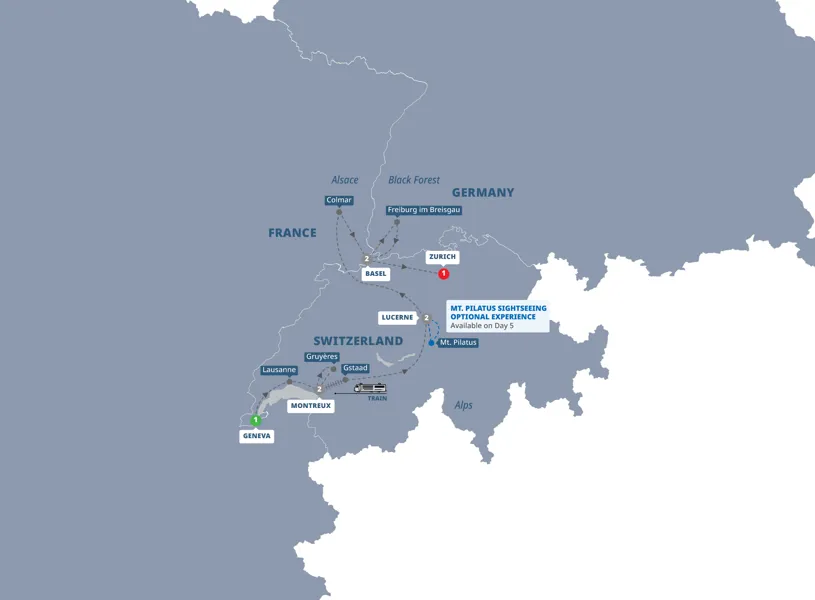

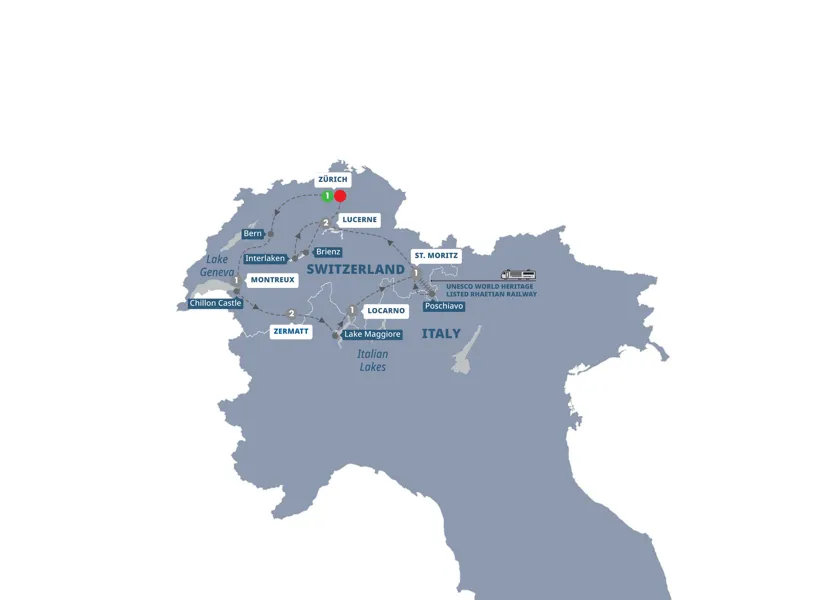


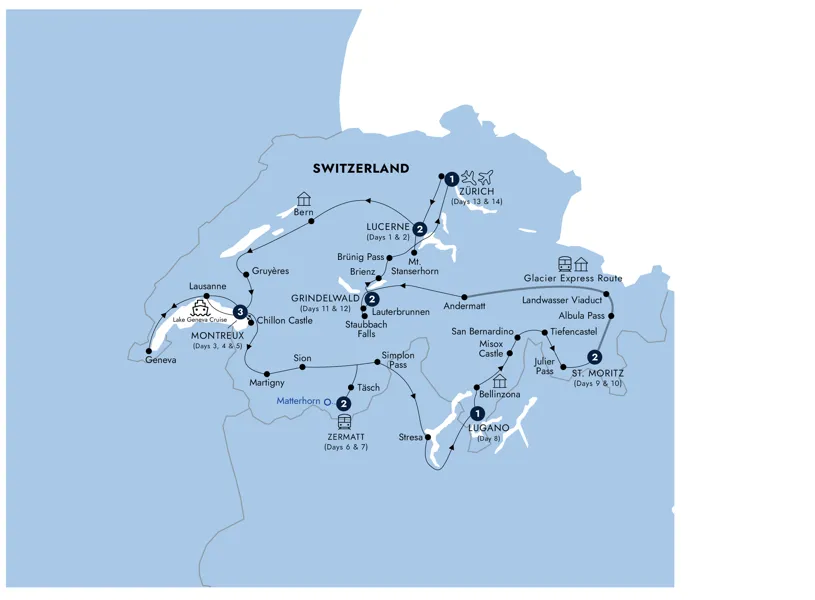
One Week Swiss Tour to Grindelwald & St. Moritz
From
$3,575
$3,218
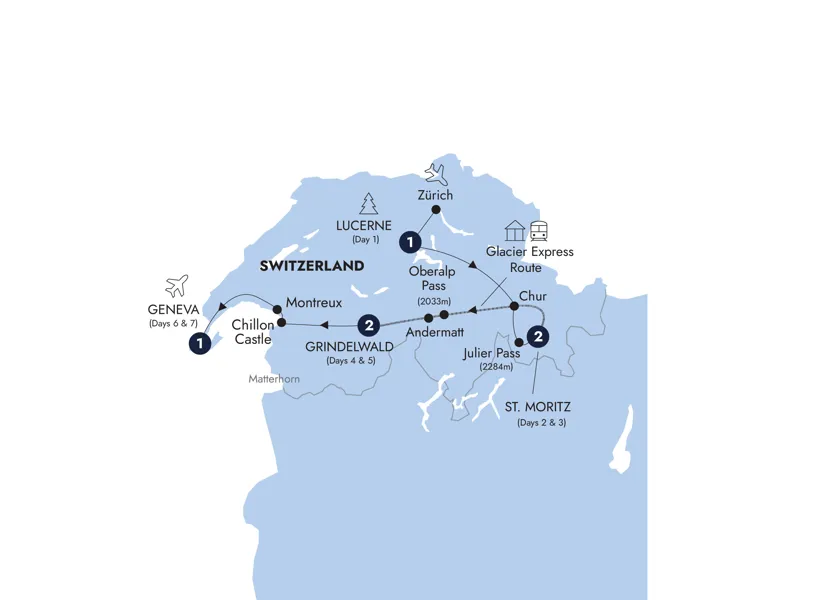

8 Day Switzerland Tour from Zermatt to Lucerne
From
$4,595
$4,136


Two Week Swiss Tour from Lucerne to St. Moritz
From
$7,575
$6,818

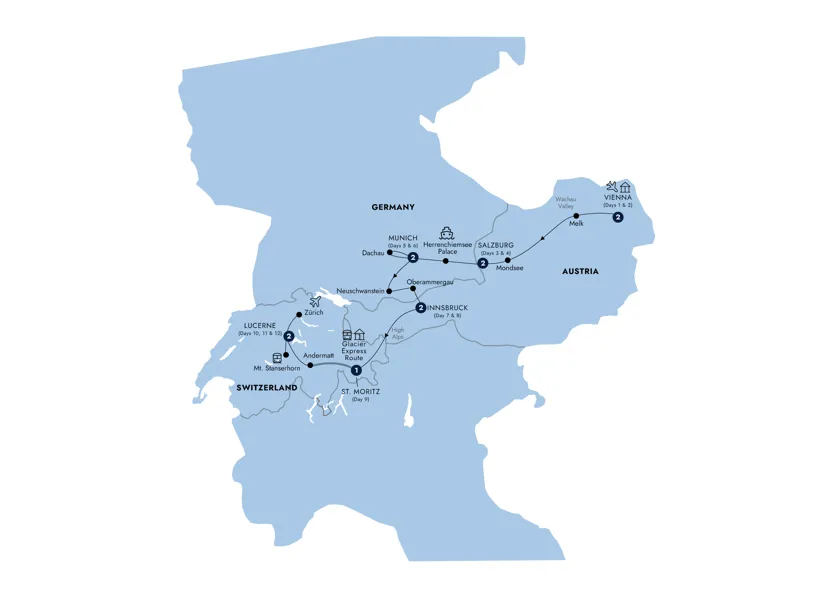
12 Day Tour to Austria, Germany & Switzerland
From
$5,450
$4,905


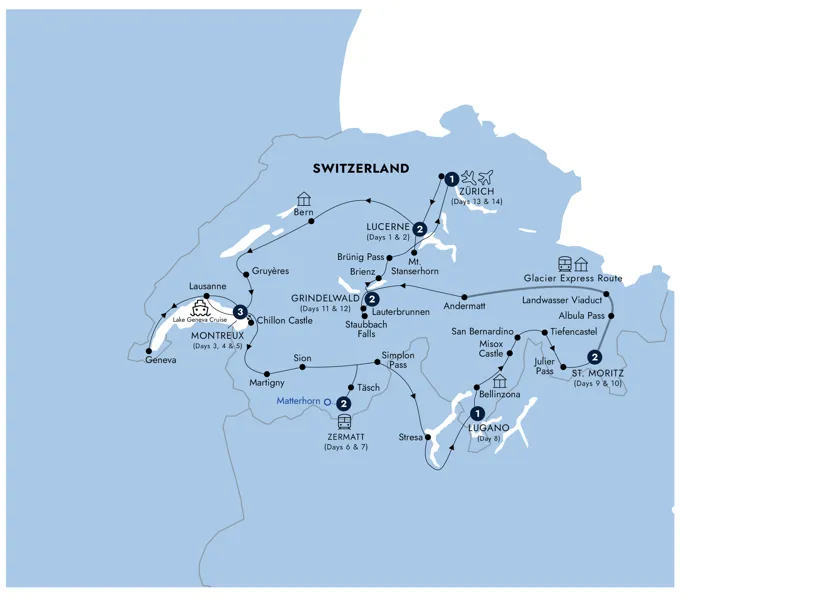
Two Week Swiss Tour from Lucerne to St. Moritz
From
$9,595
Why Experience Switzerland on a Guided Tour?
Switzerland's cultural and geographic richness becomes easier to understand when places are connected rather than experienced in isolation. A guided tour can link Zürich, Lucerne, Bern, Lake Geneva, Zermatt, St. Moritz, and the Bernese Oberland through the history, geography, food traditions, and regional identities that connect them.
Travel Directors and local experts add historical and cultural context to landmarks, cities, and landscapes. A visit to Gruyères becomes a story about Alpine agriculture and regional food traditions, while a journey through Graubünden becomes an introduction to railway history, mountain geography, and Romansh culture.
GET guided tours of Switzerland also combine well-known landmarks with experiences that reveal regional character, including Swiss wine traditions, historic castles, Alpine villages, scenic railways, local craftsmanship, and mountain communities. The result is a broader understanding of Switzerland as a country shaped by both geography and cultural diversity.
Frequently Asked Questions About Switzerland Travel


Guided tours of Switzerland can include regional food and wine traditions, medieval towns, historic castles, Alpine villages, scenic railways, and cultural experiences connected to Swiss craftsmanship and agriculture. Depending on the itinerary, travelers may experience wine in Lavaux, cheese traditions in Gruyères, woodcarving in Brienz, historic Chillon Castle, or regional culture in cities such as Bern, Geneva, Lucerne, and Zürich.
Bern, Lucerne, Geneva, Gruyères, Zürich, Montreux, and Bellinzona each offer distinct cultural and historical experiences. Bern is known for its medieval center and federal institutions, Lucerne for its historic bridges and civic landmarks, Geneva for international and humanitarian history, and Gruyères for medieval architecture and regional food traditions.
Zermatt, St. Moritz, Grindelwald, Lauterbrunnen, and Interlaken are among the most important destinations for experiencing the Swiss Alps. Each reveals a different Alpine landscape, from the Matterhorn above Zermatt to the Eiger, Mönch, and Jungfrau in the Bernese Oberland and the high valleys of Graubünden around St. Moritz.
Switzerland's best-known scenic rail experiences include the Glacier Express and routes along the Rhaetian Railway. These journeys connect Alpine communities across mountain passes, valleys, tunnels, and viaducts while providing insight into the geography and engineering history of the Swiss Alps.
Swiss food traditions include regional cheeses, fondue, raclette, chocolate, and locally produced wines. Gruyères is closely connected with its namesake cheese, while Lavaux and the Lake Geneva region are known for terraced vineyards and Swiss wine production.
Switzerland's cultural diversity reflects its geography and four national languages: German, French, Italian, and Romansh. Different regions developed distinct linguistic, architectural, culinary, and civic traditions, creating strong local identities within a shared Swiss federal culture.
Chillon Castle on Lake Geneva is one of Switzerland's most significant historic fortresses, associated with the Counts of Savoy and later with Lord Byron. Gruyères Castle and the medieval fortifications of Bellinzona also provide insight into Switzerland's regional history and strategic position within the Alps.
The Bernese Oberland combines lakes, glacial valleys, mountain communities, and major Alpine peaks including the Eiger, Mönch, and Jungfrau. Destinations such as Interlaken, Grindelwald, and Lauterbrunnen help travelers understand the relationship between mountain geography, tourism, agriculture, and settlement in central Switzerland.
Lake Geneva connects cities, vineyards, historic castles, and French-speaking communities across western Switzerland. Montreux, Geneva, Chillon Castle, and the Lavaux vineyards illustrate how trade, agriculture, literature, tourism, and international culture developed around the lake.
Guided tours connect Switzerland's cities, mountain regions, food traditions, historic landmarks, and linguistic cultures within a broader narrative. Expert interpretation helps travelers understand how places such as Zermatt, Gruyères, Geneva, St. Moritz, and Lucerne relate to Swiss history, geography, and regional identity.
Interested in Guided Tours of Europe? You Might Also Like...


 Free Brochure
Order Your Free Brochure
Sign up to order your FREE travel brochure subscription and get exclusive offers only available to our subscribers
 Download Brochure
 View Brochure Online
 Shop Deals