




From the ancient ruins of Rome and Pompeii to the artistry of Florence and the famous canals of Venice, get ready to experience la dolce vita!
Visiting Italy in Spring
The Best Places, Experiences & Travel Tips

Italy in Spring: Why It’s One of the Best Times to Visit
Spring is one of the best times to visit Italy, bringing milder weather, blooming gardens, seasonal Italian cuisine, and beautiful conditions for exploring cities and countryside. From Rome, Florence, and Venice to Tuscany, the Italian Lakes, and Southern Italy, spring offers countless ways to experience the country's history, food, art, and landscapes.
A guided tour makes an Italy spring vacation even easier. Transportation, hotels, sightseeing, and many of the details are already arranged, while Travel Directors and local experts add context to the places you visit. You'll also enjoy experiences that can be difficult to arrange independently, from dining at a historic Tuscan estate to sharing a farm-to-table meal on the slopes of Mount Vesuvius.
Why Visit Italy in the Spring?
Spring brings a new energy to Italy. Gardens begin to bloom, outdoor cafés fill their tables, seasonal ingredients return to markets, and warmer days make it easier to spend hours exploring historic cities and towns. From March through May, each month offers its own reasons to plan an Italian vacation.
Mild Weather for Sightseeing
Spring temperatures can vary significantly depending on when and where you travel, but the season generally brings milder conditions than winter and avoids the intense heat that can arrive during summer.
Comfortable temperatures make spring especially appealing for sightseeing. Spend your days exploring Rome's ancient landmarks, walking through Florence's historic center, wandering the streets of Venice, or enjoying the towns and countryside of Tuscany.
Because spring weather can change throughout the day, layers are essential. A cool morning can give way to a warm, sunny afternoon before temperatures drop again in the evening.
Spring Flowers, Gardens & Green Landscapes
Spring transforms gardens and countryside throughout Italy. Trees and flowers come into bloom, hillsides turn green, and historic villas reopen their gardens for the season.
Northern Italy is especially beautiful at this time of year. On Lake Maggiore, the gardens of Isola Bella combine landscaped terraces, flowers, statues, and views across the lake. Tuscany's rolling countryside also becomes increasingly green as spring progresses.
Visit Before the Summer Rush
Spring falls before Italy's peak summer travel season, which can make it an appealing time to explore popular destinations. March and portions of April may offer a different atmosphere than the height of summer, although major cities and attractions can still be busy.
Easter in Italy is an important exception. Rome and Vatican City can attract significant numbers of visitors around Holy Week and Easter, while other Italian cities and destinations may also become busier during European holidays.
Traveling on a guided tour means many of the logistical details, reservations, transportation, and included sightseeing have already been arranged, which can make visiting popular destinations easier during busy periods.

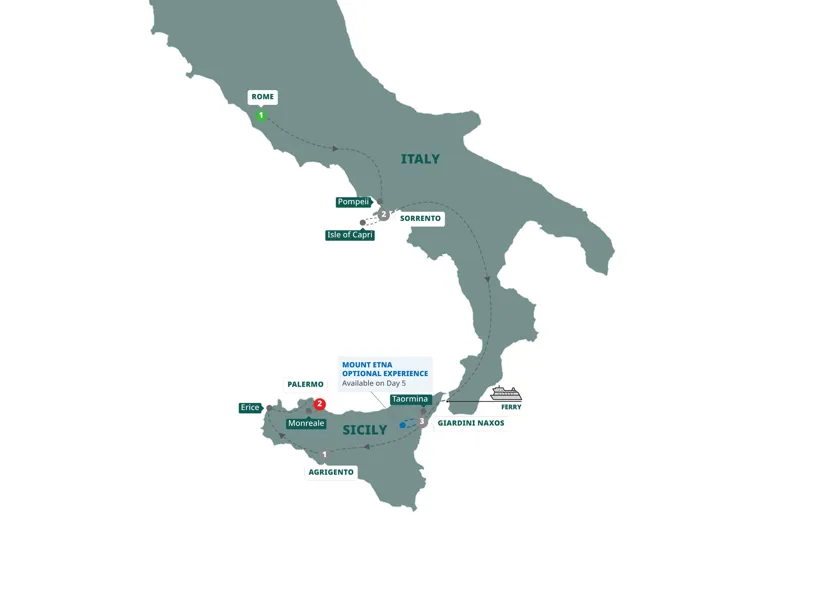
8 Day Italy Tour of Milan, Cinque Terre
From
$2,250
$2,025



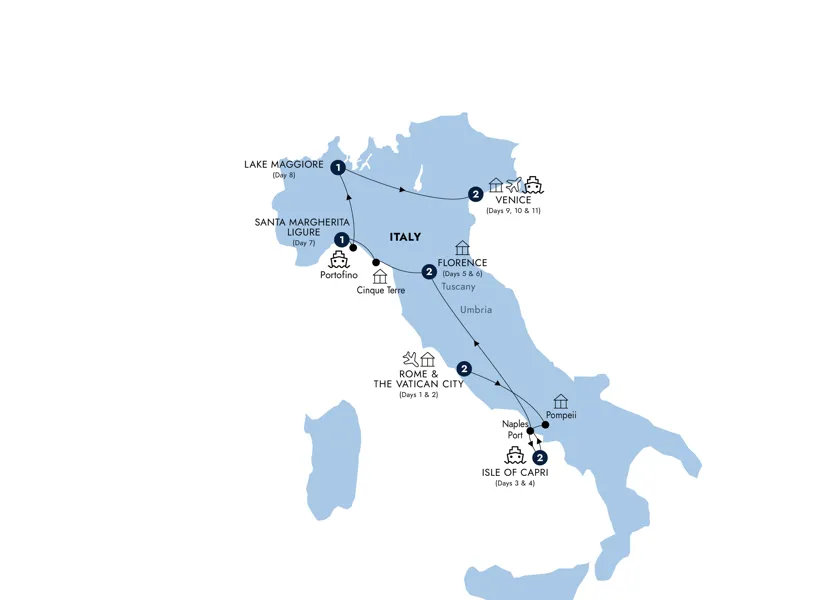
11 Day Tour to Isle of Capri, Venice & Florence
From
$5,475
$4,928


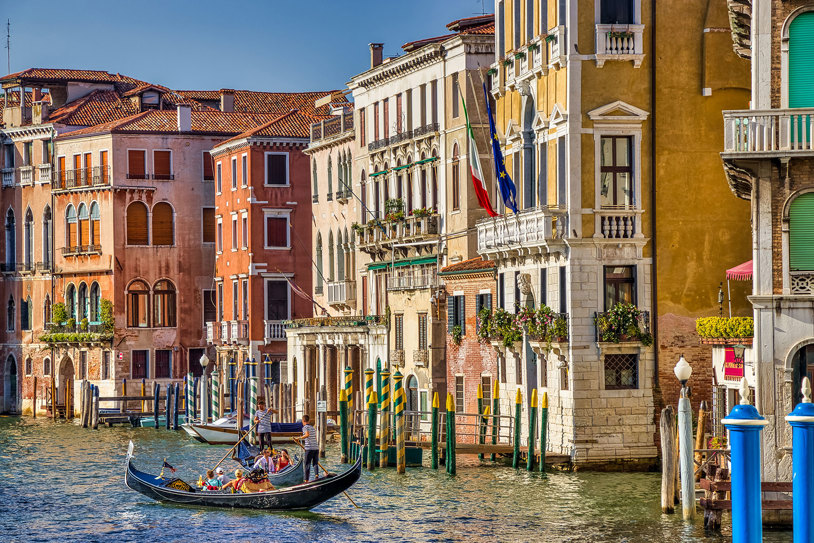


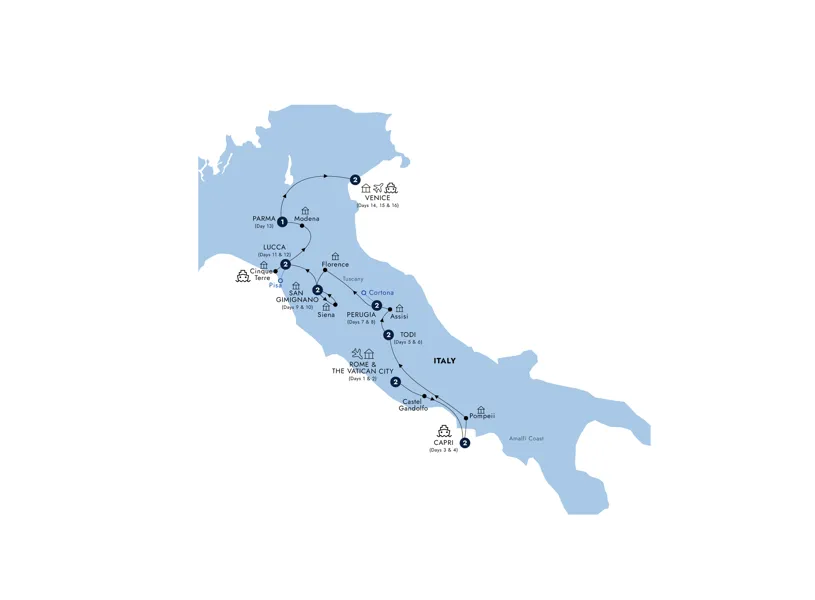
16 Day Italy Tour to Venice, Lucca & Perugia
From
$6,750
$6,075

10 Day Italy Tour to Milan, Venice & Verona
From
$4,150
$3,735


When Is the Best Time to Visit Italy in Spring?
Italy's spring travel season stretches from the cooler days of March through the warmer weather of May. The best month for your vacation depends on where you want to go and the experiences you want to have.
Italy in March
March marks the transition from winter to spring. Expect cooler temperatures and changing weather, particularly in northern and central Italy, but increasingly mild conditions as the month progresses.
It's a good time for sightseeing in cities such as Rome and Florence, where much of your day may be spent exploring museums, churches, historic neighborhoods, and archaeological sites. Pack layers and a rain jacket so you're prepared for changing conditions.
Italy in April
By April, warmer days, greener landscapes, and spring flowers are appearing across much of Italy. It's an especially beautiful time to explore Tuscany, historic cities, gardens, and the Italian countryside.
Easter dates vary from year to year and can have a major impact on travel, particularly in Rome and Vatican City. If you're visiting during the Easter period, having accommodations, transportation, and major sightseeing already arranged can make your vacation much easier.
Italy in May
May combines warmer temperatures with the colors of late spring, making it an excellent time to experience both Italy's cities and countryside.
Northern Italy and the Italian Lakes become particularly appealing as temperatures rise. Tuscany, Venice, Rome, and coastal destinations can also be beautiful during May, before the height of the summer travel season.

What Is the Weather Like in Italy in Spring?
There isn't one spring forecast for all of Italy. The country stretches from the Alps in the north to Sicily in the Mediterranean, so conditions can be very different depending on where you're traveling.
Northern Italy tends to remain cooler, particularly early in the season, while central Italy becomes increasingly mild through April and May. Southern Italy and Sicily generally experience warmer spring conditions.
Rain is possible throughout the season, and temperatures can change considerably between morning and afternoon. Instead of packing for one type of weather, prepare for a mixture of cool mornings, comfortable afternoons, occasional rain, and increasingly warm days as you get closer to summer.
The Best Places to Visit in Italy in Spring
One of the advantages of traveling to Italy during spring is the variety. You can explore historic cities, wine regions, lakes, hill towns, islands, and coastlines on the same vacation.
Rome
Spring is an excellent season for exploring Rome's extraordinary collection of ancient, Renaissance, and Baroque landmarks. Walk through the Roman Forum, stand beneath the Colosseum, toss a coin into the Trevi Fountain, and visit Vatican City to see St. Peter's Basilica and masterpieces within the Vatican Museums.
With so much of Rome best experienced on foot, the milder temperatures of spring can make long days of sightseeing more comfortable.
Florence & Tuscany
Florence brings together some of Italy's greatest Renaissance art and architecture, while the surrounding Tuscan countryside offers a completely different experience.
See Michelangelo's David, admire Florence's famous Duomo, and explore the city's historic streets before heading into Tuscany's rolling hills, vineyards, medieval towns, and family-run farms.
On select guided tours, you can even join Count Miari Fulcis for dinner at his 15th-century organic olive oil estate, sharing a meal while learning about generations of family history.
Venice & Northern Italy
Spring is a beautiful time to experience northern Italy. Explore the canals, bridges, piazzas, and palaces of Venice before traveling to destinations such as Milan, Verona, the Italian Lakes, or the colorful villages of Liguria.
Farther west, the Italian Lakes offer mountain scenery, elegant lakeside towns, historic villas, and elaborate gardens coming to life for spring.
Southern Italy & Sicily
Head south for ancient ruins, coastal scenery, distinctive regional cuisine, and centuries of history.
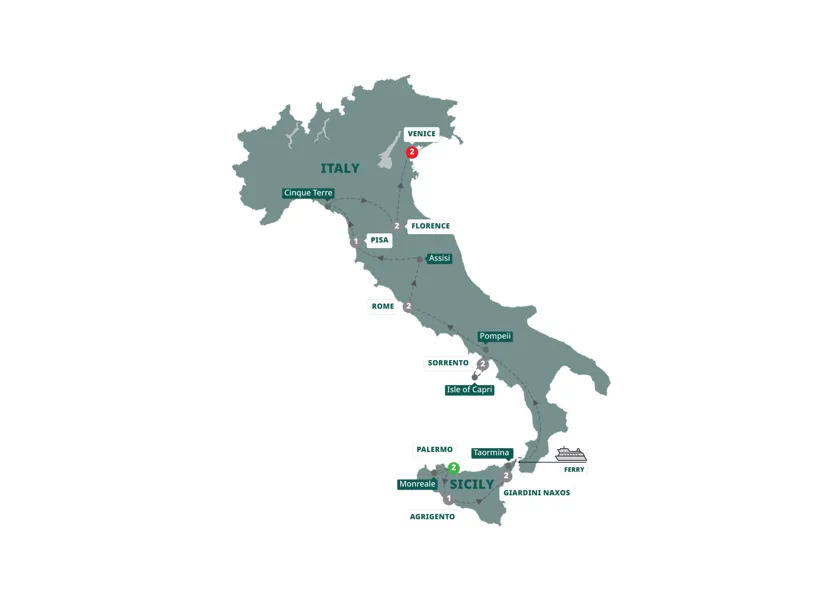
Explore Pompeii beneath Mount Vesuvius, visit the island of Capri, travel along the Amalfi Coast, or continue into Sicily to experience its Greek and Roman archaeological sites, historic cities, villages, vineyards, and Mediterranean landscapes.
Italy's Hill Towns & Historic Villages
Some of Italy's most memorable destinations are found beyond its largest cities.
See the distinctive trulli houses of Alberobello in Puglia or explore Matera, where homes, churches, and passageways were carved into the rock of the Sassi districts. Tuscany, Umbria, and other regions are also filled with medieval towns where historic streets, piazzas, churches, and countryside reveal another side of Italian life.
Spring Food & Seasonal Flavors in Italy
Food in Italy is deeply connected to place and season, making spring an especially interesting time to explore regional cuisine.
Seasonal Italian Foods to Try
Spring brings ingredients such as artichokes, asparagus, peas, fava beans, and strawberries to Italian kitchens and markets. What appears on the menu will depend on where you travel, giving you an opportunity to taste foods associated with individual regions and seasons.
When it come to the top Italian dishes to try, the experience goes beyond ordering pasta or pizza. Regional recipes, cheeses, cured meats, olive oils, wines, breads, vegetables, and desserts can tell you as much about a destination as its landmarks.
Explore Italy's Markets
Italian food markets are an excellent place to see what's in season and learn more about regional cooking.
Market stalls can be filled with fresh produce, cheeses, cured meats, breads, spices, seafood, and other specialties. Exploring with an expert adds context, helping you understand unfamiliar ingredients, how they're used, and the traditions behind regional dishes.
On select guided tours, culinary experiences extend beyond the market. Near Mount Vesuvius, for example, you may visit a family-run farm that produces Piennolo tomatoes and enjoy a farm-to-table meal featuring ingredients grown in the area's volcanic soil.

Experience Italy's History, Art & Culture
Few destinations combine ancient history, Renaissance art, architecture, archaeology, and living traditions quite like Italy.
Visit Italy's Famous Landmarks
Italy's best-known sights have earned their reputations for a reason. Rome's ancient ruins, Florence's Renaissance masterpieces, Venice's canals, Pompeii's remarkably preserved streets, and Vatican City's artistic treasures are experiences many travelers have dreamed about for years.
Guided travel can make visiting these places simpler. Depending on the itinerary, included sightseeing may feature priority entry, skip-the-line access, and immersive guided visits with experts, allowing you to spend more of your vacation experiencing a destination instead of figuring out the logistics.
See Italy Through the Eyes of an Expert
Standing in front of an ancient ruin or Renaissance masterpiece is impressive. Understanding what you're looking at can transform the experience.
Local experts can reveal the stories behind Italy's art, architecture, archaeological sites, neighborhoods, and traditions. In places layered with thousands of years of history, that context helps connect what you're seeing to the people and events that shaped it.
Visit Italy's Wine Regions in Spring
Italy's wine regions aren't just about what's in the glass. They're also home to historic estates, family traditions, regional foods, medieval towns, and some of the country's most beautiful countryside.
Tuscany
Tuscany may be Italy's most recognizable wine region, with vineyards stretching across rolling hills between medieval towns and Renaissance cities.
A visit can introduce you to regional wines, olive oil, traditional Tuscan cooking, historic estates, and the families who have worked this land for generations.
Piedmont
In northwestern Italy, Piedmont is renowned for wines such as Barolo and Barbaresco. Vineyards sit among hills and historic towns, while the region's culinary traditions make wine and food natural companions.
Veneto
Veneto stretches from the Dolomites toward Venice and includes some of Italy's best-known wine-producing areas. Visiting the region can add another dimension to a northern Italy vacation, pairing vineyard landscapes and tastings with historic towns and cities.

Discover Italy's Coast in Spring
Italy's coastline changes dramatically from north to south, from the colorful villages of Liguria to the dramatic cliffs of the Amalfi Coast and Mediterranean shores of Sicily.
Cinque Terre
The five villages of Cinque Terre cling to the Ligurian coastline between steep hills and the sea. Colorful houses, small harbors, terraced landscapes, and coastal views make the region instantly recognizable.
The Amalfi Coast
The Amalfi Coast combines steep cliffs, Mediterranean views, lemon groves, and historic towns along one of Italy's most famous stretches of coastline.
Spring brings increasingly warm weather and greener landscapes, making it a beautiful season to see destinations such as Amalfi, Positano, and nearby Capri.
Puglia
Puglia forms the heel of Italy's boot and offers a different coastal experience. Whitewashed towns, olive groves, Adriatic and Ionian coastlines, regional cuisine, and the distinctive trulli of Alberobello make southern Puglia unlike anywhere else in Italy.
Why Take a Guided Tour of Italy in Spring?
Italy rewards curiosity, but planning a vacation that connects multiple cities and regions can quickly become complicated. Transportation, hotels, attraction tickets, reservations, luggage, and sightseeing all have to fit together.
A guided vacation handles much of that work before you arrive.
Skip the Stress of Planning
Guided itineraries are designed to connect destinations and experiences without requiring you to coordinate every transfer, hotel, and sightseeing reservation yourself.
Your accommodations and transportation are arranged, many sightseeing experiences are included, and your Travel Director helps keep the journey running smoothly. Instead of spending your vacation figuring out how to get from one destination to another, you can focus on enjoying where you are.
Get More From Italy's Must-See Sights
There's a big difference between seeing a landmark and understanding why it matters.
Expert-led visits help bring Italy's ancient ruins, churches, museums, neighborhoods, and works of art to life. You'll hear the history and stories behind what you're seeing while having someone available to answer questions along the way.
Enjoy Experiences You Couldn't Easily Arrange Yourself
Some of the most memorable moments in Italy happen beyond its famous landmarks.
Guided tours can connect travelers with family-run farms, historic estates, wineries, artisans, chefs, and other experiences that can be difficult to find or arrange independently.
You might sit down for dinner at a centuries-old Tuscan estate, taste produce grown in volcanic soil near Mount Vesuvius, or learn about regional traditions directly from the people who know them best.
Travel With Support From Start to Finish
Planning support begins before you leave home. GET's Travel Specialists can help you find a guided vacation that fits what you want to see and help with details such as flights and travel insurance.
Once you're in Italy, your Travel Director helps manage the day-to-day details of your vacation. Transportation, hotels, included sightseeing, and many other arrangements are already taken care of, while you'll still have opportunities for free time and personal exploration depending on your itinerary.
What to Pack for Italy in Spring
Packing for Italy in spring is all about versatility. Conditions can vary by region, month, elevation, and time of day, so clothing you can layer is more useful than packing for one specific temperature.
Bring comfortable walking shoes for cobblestone streets and sightseeing, lightweight tops and sweaters, long pants, a light jacket, and a compact umbrella or rain jacket. Sunglasses, sunscreen, and a hat can also be useful as the days become sunnier later in spring.
If your itinerary includes visiting churches or religious sites, bring clothing that allows you to cover your shoulders and knees when required.
Most importantly, check the forecast for the specific Italian destinations on your itinerary shortly before departure rather than relying on general seasonal averages.
Plan Your Spring Vacation to Italy
Whether you dream of seeing Rome and Florence for the first time, exploring the Italian countryside, tasting your way through Tuscany, visiting ancient Pompeii, or experiencing the lakes and villages of northern Italy, spring gives you plenty of reasons to go.
Going guided makes it easier to experience more of Italy without having to plan every detail yourself. With transportation, accommodations, sightseeing, expert guidance, and unique experiences brought together into one itinerary, you can spend less time managing your vacation and more time enjoying Italy.
Explore our guided tours of Italy and find the spring vacation that takes you where you want to go.
Frequently Asked Questions About Visiting Italy in Spring


Yes. Spring offers increasingly mild weather, blooming landscapes, seasonal food, and comfortable conditions for sightseeing throughout much of Italy. Conditions vary significantly from northern Italy to Sicily and from March to May, so the best time to travel depends on the destinations you want to visit.
Italy's spring weather varies by region and month. March is generally cooler and more changeable, April brings increasingly mild temperatures and spring growth, and May is typically warmer as Italy approaches summer. Northern destinations tend to be cooler than southern Italy and Sicily. Rain is possible throughout the season.
Each month has advantages. March offers cooler sightseeing weather and marks the beginning of spring. April brings greener landscapes and more flowers, although Easter can increase visitor numbers in popular destinations. May generally brings warmer temperatures and excellent conditions for combining cities, countryside, lakes, and coastal destinations.
Rome, Florence, Tuscany, Venice, the Italian Lakes, Cinque Terre, the Amalfi Coast, Puglia, Sicily, and destinations throughout northern and southern Italy can all be excellent choices. The best destinations for your trip depend on the month you're traveling and whether you're most interested in history, art, food, wine, countryside, or coastal scenery.
Crowds vary considerably by destination and date. Spring generally falls outside the peak summer travel season, but famous attractions in Rome, Florence, Venice, and Vatican City can still be busy. Easter, Holy Week, and other holidays can bring additional visitors, particularly to Rome and major cultural destinations.
Pack layers, comfortable walking shoes, a lightweight jacket, and rain protection. Sunglasses, sunscreen, and a hat are useful as the weather warms. You'll also want clothing that covers your shoulders and knees when visiting churches and certain religious sites.
A week can be enough to concentrate on a few destinations or one region, while 10 to 14 days allows you to experience several cities and regions without trying to see the entire country at once. If this is your first trip, a guided itinerary can help you see several of Italy's major highlights efficiently while taking care of transportation and accommodations along the way.
Guided tours simplify transportation, accommodations, sightseeing, and many other travel logistics. They also provide access to Travel Directors and local experts who add context to the places you visit. Depending on your itinerary, you may also enjoy priority entry, skip-the-line access, included meals, and experiences that would be difficult to arrange independently.
Yes. Most guided tours combine planned sightseeing and included experiences with opportunities for free time. Depending on your itinerary, you may have time to explore independently, shop, visit a café or restaurant, or choose an optional experience. Check the individual itinerary when booking to see how each day is structured.
You Might Also Like


 Free Brochure
Order Your Free Brochure
Sign up to order your FREE travel brochure subscription and get exclusive offers only available to our subscribers
 Download Brochure
 View Brochure Online
 Shop Deals